#33 Ceramic firing cycle, emissions & chemism of digital inks



- Introduction
- Chemism of the inks & ceramic kilns :
- Composition of digital inks
- Focus: polarity vs non polarity
- Ceramic kilns
- Different behaviors of the inks
1. Introduction
Polluting and odour emissions are today two very important topics for ceramic producers.
This is a problem that arises in the final stages of the ceramic production process (during the firing cycle) but whose origins are in the previous application processes that take place along the glazing line.
The roots of emissions can be different and numerous but digital inks and digital glues, due to their chemism, play a very important role and they can be considered as the core of the problem.
2. Chemism of the inks & ceramic kilns
When we speak of chemism we usually refer to the set of chemical characteristics of a substance or, the phenomena produced by specific chemical actions promoted by a substance.
In case of digital inks, whose composition is quite complex, we just need to pay attention to some specific solvents that during the firing cycle – during semi-combustion and combustion – may develop and release emissions.
A) COMPOSITION OF DIGITAL INKS
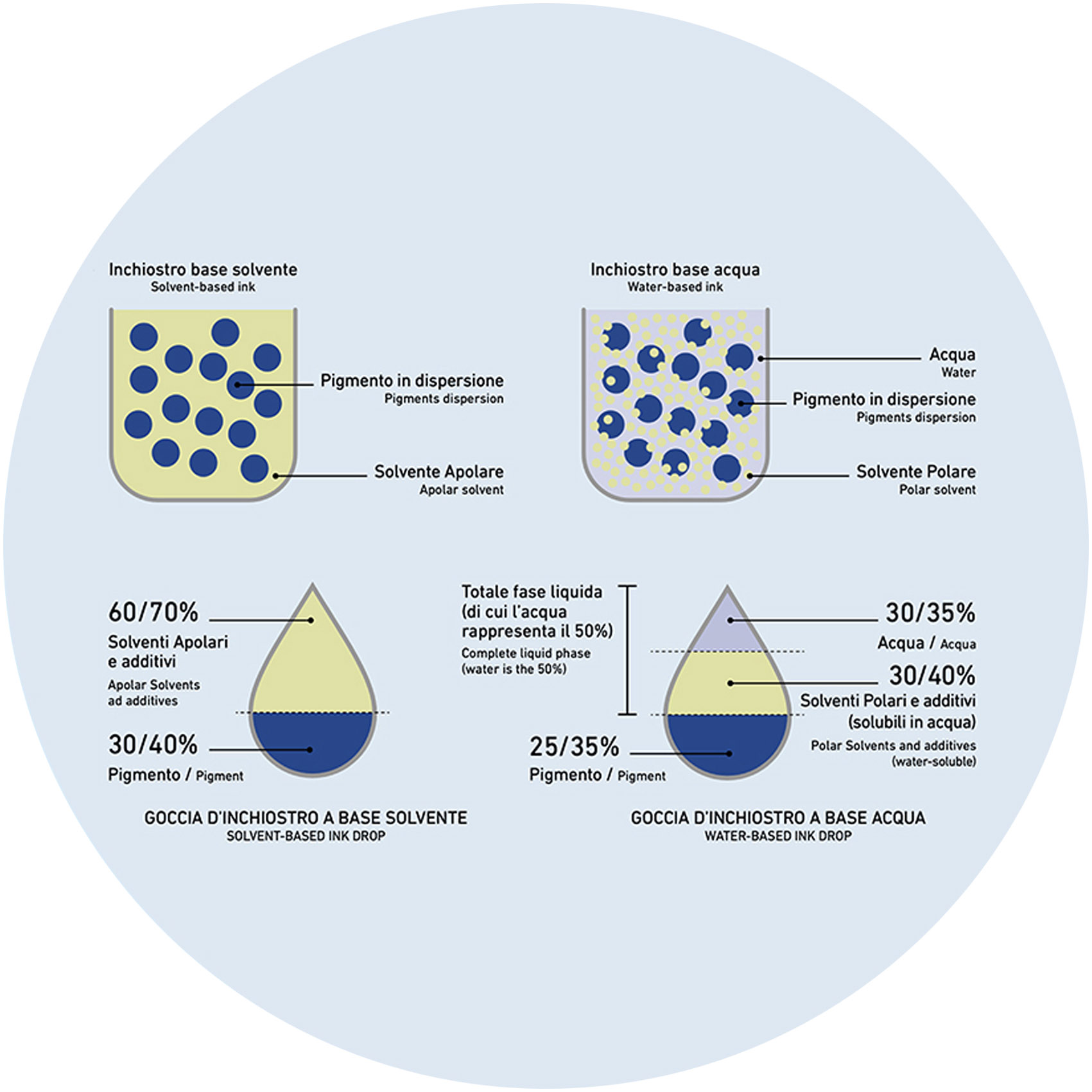
Following here some data about the composition of the main categories of digital inks (solvent based VS water-based) to show the most important difference between the two. Solvent-based digital inks consist of 60/70% of non-polar solvent and chemical plus 30/40%n of pigments, while water-based digital inks consist of 30/40% of polar solvent and chemicals, 25/35% of pigments and 30/35% of water. Speaking about emissions, non-polar solvents are the main responsible for the problem. Since within water-based digital inks these solvents are replaced by polar solvents, the problem is significantly reduced.
B) FOCUS: POLARITY vs NON POLARITY
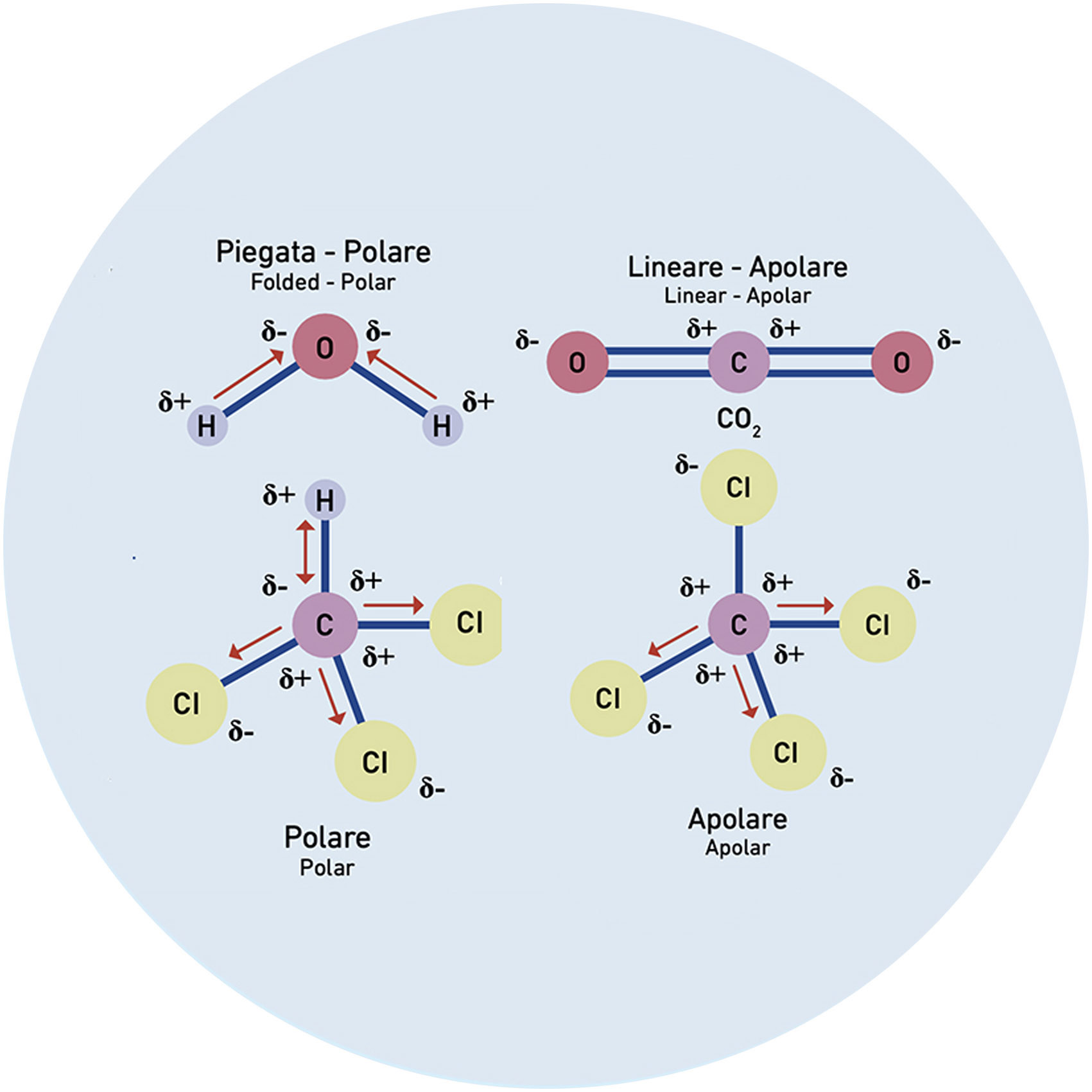
In general, the features of a substance usually depend on the shape of their molecules. What does that mean?
In a molecule, atoms are arranged according to specific geometric bounds that define and provide the substance with specific properties. What defines the geometry of a molecule is the bond angle, that is the angle formed by the axes that join the nuclei of the atoms that bind together. The geometry of the molecule, that is the arrangement in the space of its bonds, is one of the factors that affect and define its polarity or non-polarity. As a rule, a molecule is polar if the sum of the dipolar moments of all its bonds is different from zero.
C) CERAMIC KILNS
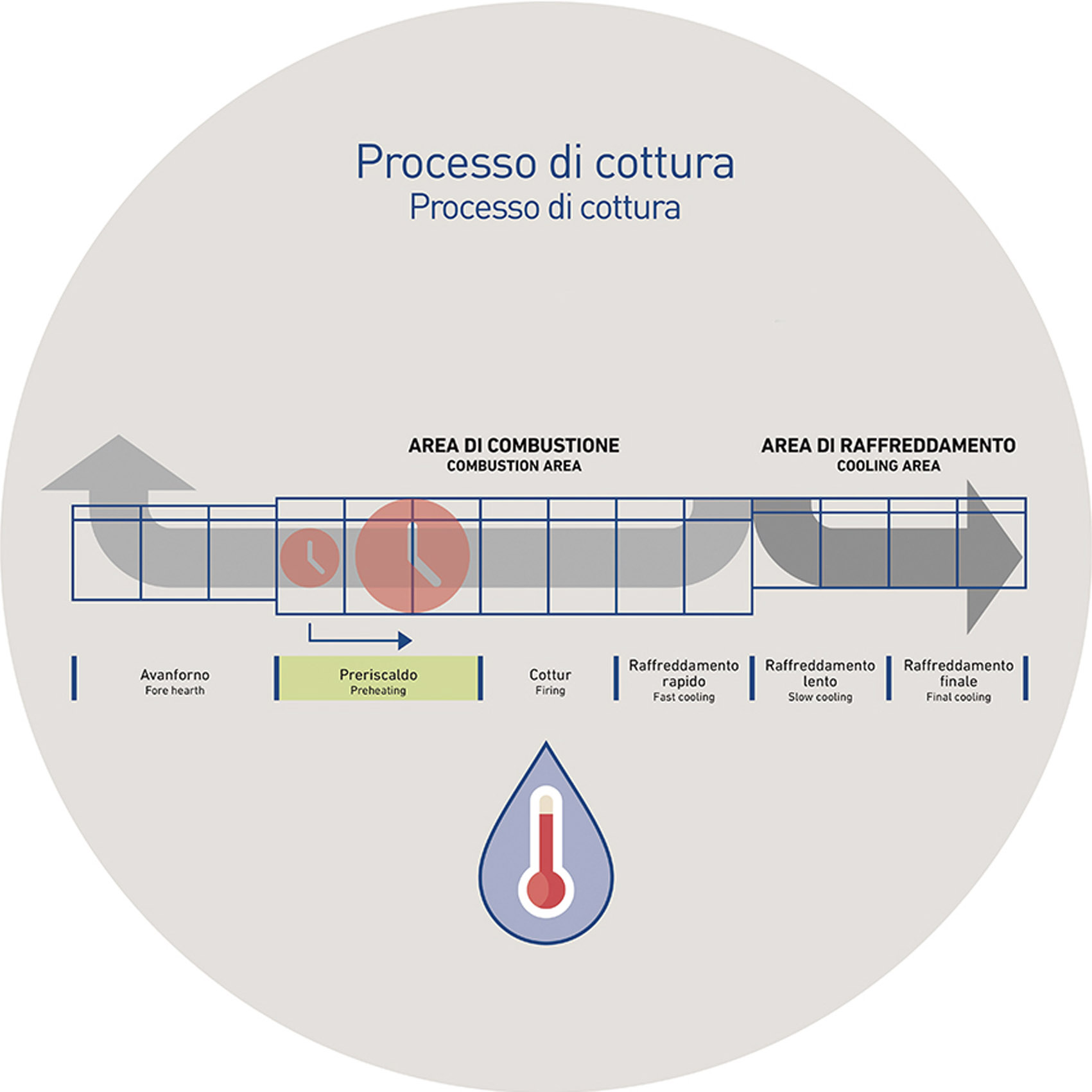
Ceramic kilns are built to develop maximum energy efficiency. To reach the best results, cooking fumes are conveyed from the hottest area of the kiln (which is approximately half of its overall length) to the entrance area where there is the chimney for exhaust fumes.
Why do cooking fumes are directed towards the kiln inlet rather than to its final part? The reason it’s quite simple and it’s due the possibility to optimize the use of the heat, from the area where tiles reach the highest temperature to the pre-heating area. However, despite the energy benefit, ceramic firing system together with the chemism of the inks helps to bring out the problem that negatively affect the air.
We should also consider the increasingly shorter times of the firing cycle that on the one hand positively acts on the industrial productivity, but that on the other hand prevents some of the inks organic compounds to properly complete their combustion cycle, with particular regards to high-boiling solvents that usually reach their burning point only at very high temperature.
With a view to simplification, ceramic firing cycle can be divided in three steps:
- PRE-HEATING: phase in which phenomena of solvent distillation may occur (in which a state change of a substance may occur: from liquid to gaseous state)
- PRE-FIRING: stage during which may arise semi-combustion phenomena of organic molecules
- FIRING: during which organic compounds usually reach complete combustion
According to the chemism of the organic substances, semi-combustion phenomena may lead to formation of those molecules that usually develop pollutants, such as aldehydes, acrolein and organic acids, also producing molecules marked by low odor threshold. This is the result of the problem, since these bad odors can be detected even in very little percentage.
D) DIFFERENT BEHAVIORS OF THE INKS
What are the different behaviors of digital inks?
During combustion, the pigment (the solid component of the ink) adheres to the surface. Both in case of solvent-based and water-based inks.
On the one hand the non-polar solvent of the solvent-based inks broken up into strong smelling chemical compounds. On the other hand, the polar solvents specifically developed and selected for water-based inks produce, during their decomposition, organic molecules that do not produce unpleasant odors.
The non-polar solvent of a solvent-based ink – during the pre-combustion phase – consists of long carbon chains with a variable number of branches. The combustion breaks the chains (cracking phenomena) in smaller chains, responsible for the strong odors.
Vice versa, water-based digital inks consist of a chain of water-soluble polar solvent that during combustion produce a kind of decomposition (or degradation) that does not negatively affect the air, therefore without producing any bad odor. It is therefore clear that it is very important, when developing and producing digital inks for ceramic production, to make the right choices in terms of organic chemistry in order to reduce or remove odors and polluting emissions.