#57 Maintenance fluid for digital printers



- Introduction
- Architecture of digital printers for ceramics
- Cleaner: chemistry of cleaning
- Stand-by fluid: static maintenane for smart shutdowns
- Model fluid: visual validation of print quality
- Conclusions: chemistry & reliability of ceramic digital printing
1. Introduction
Digital printing has transformed the ceramic industry, enabling increasingly sophisticated, versatile, and customized designs. At the heart of this technological shift are ceramic digital printers—complex machines that use inkjet technology to precisely and consistently apply a range of functional and aesthetic materials.
These materials include inks, glues, glazes, engobes, and effect materials—formulations similar to inks that create various surface finishes to enhance the look and feel of ceramic products.
Collectively, they play a key role in defining both the visual impact and the technical performance of the ceramic surface.
Behind the efficiency and quality of ceramic production lie a number of invisible yet essential fluids: digital maintenance fluids. While they don’t directly affect the final technical or aesthetic outcome, their role is critical in ensuring the proper functioning and long-term reliability of digital printing machines.
There are several types of these fluids, but here we focus on three main categories, offering a general overview of their roles, functions, and key characteristics.
- Cleaner,
- Stand-by fluid
- Model fluid
2. Architecture of digital printers for ceramics
Most digital printers—particularly those most widely used today in ceramic production lines—operate using piezoelectric drop-on-demand technology. This technique relies on the ejection of material in the form of droplets, generated by the deformation of piezoelectric crystals. This deformation is triggered by pressure created within each nozzle, resulting in precise droplet release on demand.
Piezoelectric materials change shape when subjected to an electric pulse, making them ideal for controlling the flow of ink or other functional fluids.
The printheads are mounted on linear bars to allow continuous application of materials across the entire width of the tile surface (the print area varies depending on the size of the ceramic substrate being produced). As the tile is transported by conveyor belts along the production line, it passes under the printheads, receiving the necessary layers of material.
During production, failure to maintain the correct parameters or follow proper procedures can lead to a range of issues affecting both the printheads and the overall machine. Among the most common are nozzle blockages caused by micro ceramic residues or chemical and physical changes in inks and other materials used. Likewise, the application of products such as inks, glues, and glazes can encounter difficulties if specific preparatory and preventive actions aren’t carried out before the actual printing process begins.
In general—and while not mandatory—it is strongly recommended to perform regular cleaning and maintenance cycles on the internal circuits of digital printers using specially formulated chemical fluids. These practices help prevent machine downtime, quality drops, and irreversible damage to printer components.
3. Cleaner: chemistry of cleaning
The CLEANER is a technical fluid designed for thoroughly washing the internal circuits of digital printers. It is used whenever ink needs to be replaced, extraordinary maintenance is required, or the machine must be prepared for an extended shutdown.
In particular, the use of cleaner is essentially mandatory whenever there is a transition from a solvent-based application to a water-based one—or vice versa. If these two chemically different fluids come into contact, the consequences can be quite significant.
This type of incompatibility can also occur even when switching between products within the same general category (e.g., from one solvent-based ink to another) if their formulations differ substantially and may not be chemically compatible.
Cleaners are typically solvent-based blends, which may be single-component solutions but are more commonly complex multicomponent mixtures. At present, two main families of cleaners can be identified, each corresponding to the chemical nature of the fluids to be removed:
- Cleaner for solvent-based inks: non-polar or weakly polar systems specifically formulated to dissolve compounds that share similar chemical characteristics.
- Cleaner for water-based (WB) inks: typically more complex formulations that require compatibility with polar systems. These cleaners must exhibit varying degrees of polarity—pronounced depending on the polarity of the specific inks or fluids they are intended to work with.
The effectiveness of a cleaner is determined by its solvent power (i.e., its ability to dissolve and/or remove residues), its chemical compatibility with inks and glues and its neutrality toward machine components such as rubber or steel tubing, seals, valves, and fittings.
The use of cleaners—as well as stand-by fluids—is crucial in preventing unwanted phenomena such as gelation, phase separation, and precipitation. These are the most visible and common signs of incompatibility or chemical-physical instability between two materials that are introduced into the machine in succession (e.g., two adhesives, an adhesive followed by an ink, two different inks, etc.).
To avoid such issues, each cleaner is formulated to have broad-spectrum action, with carefully controlled polarity parameters. These are complex systems that cannot rely on a single property.
Cleaning performance depends on multiple factors, such as circuit design, machine geometry, flow rate, frequency of maintenance, and cleaning routines. For this reason, each situation requires a comprehensive evaluation that takes as many variables as possible into account.
Cleaners are typically (though not always) colorless, allowing for visual monitoring of the cleaning process: initial wash cycles may show colored residues, while clear fluid at the end of the cycle indicates complete cleaning. As a rule, cleaners should also be thermostable at the temperatures encountered along the production line, ensuring they remain stable during application and maintain their properties (since solvent performance is known to vary with temperature).
At the same time, cleaners should evaporate slowly enough to prevent gas formation within the circuit, which could alter internal pressure and disrupt the hydraulic balance of the system.
4. Stand-by fluid: static maintenane for smart shutdowns
When a prolonged machine shutdown is expected, it is good practice to remove the digital product and, after the appropriate cleaning cycles using suitable cleaners, replace it with a maintenance fluid known as stand-by fluid.
This procedure helps prevent issues such as drying, polymerization, or crystallization of residual materials inside the printheads or other components of the circuit, while also protecting internal surfaces from oxidation or scaling.
Stand-by fluids generally share similar chemical and physical properties with cleaners. Their viscosity is carefully controlled and optimized to maintain a slight operating pressure within the circuits, which helps prevent stagnation in micro-areas of the system where residue could otherwise accumulate.
Here too, compatibility with both machine materials and residual inks is essential. The fluid must remain chemically stable for weeks, without forming precipitates or undergoing changes in density or viscosity. A properly formulated stand-by fluid ensures that, upon system restart, the printheads are immediately operational—with minimal downtime and no need for additional intensive cleaning.
5. Model fluid: visual validation of print quality
Model fluids represent a distinct category of technical fluids: they are not intended for actual production but are essential for print calibration and quality certification. These are colored fluids specifically designed to be jetted from the printheads onto paper and then optically analyzed to detect any printing issues that could compromise the result.
The composition of a model fluid is particularly sophisticated—it must combine intense, stable coloration (as some dyes, especially organic ones, are light-sensitive and may fade or shift in tone, distorting the diagnostic reading) with easy removability (after testing, the fluid must be easily washable).
Since model fluids are discharged through the same nozzles used in digital printing, they must meet precise requirements in terms of surface tension and rheological properties (such as viscosity), all of which are critical for proper droplet formation.
Visual output is essential: the test prints must clearly display the activity of each individual nozzle through lines, dots, or even fine textures, enabling immediate detection of machine malfunctions.
Examples include trajectory misalignment and partial or complete nozzle blockages—defects that appear on paper as printing irregularities. In the first case, they show up as ink overlaps; in the second, as missing ink in the affected print area.
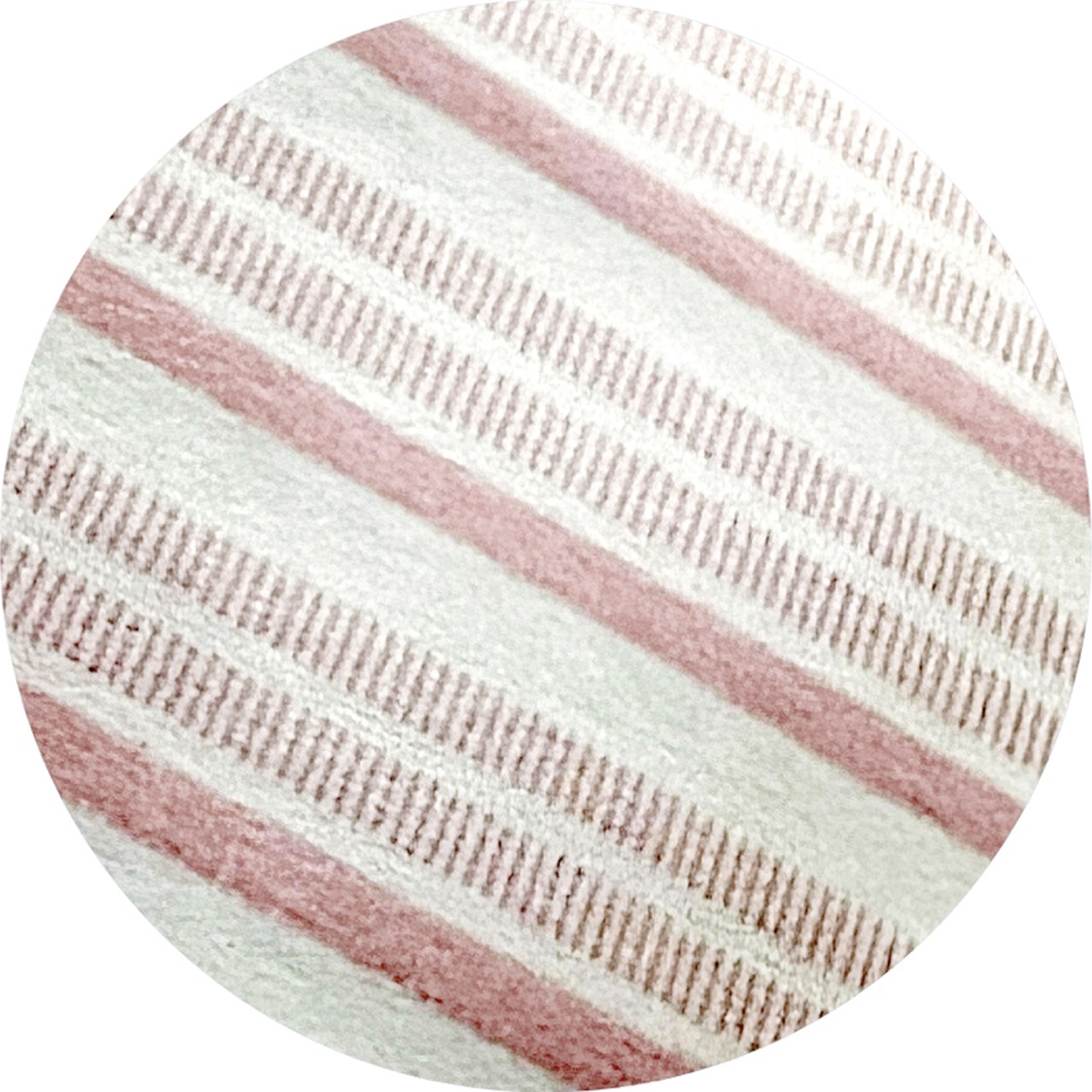
Paper print test for printer performance monitoring
6. Conclusions: chemistry & reliability of ceramic digital printing
The use of digital printing in the ceramic industry has placed chemistry at the core of production reliability. Digital maintenance fluids—often overlooked because they do not directly affect the final aesthetic result—are in fact essential for ensuring the continuity, precision, and longevity of printing equipment. Cleaners, stand-by fluids, and model fluids must meet strict requirements for compatibility, effectiveness, stability, and safety. Their formulations are complex, designed to balance technical demands with operational needs. Proper selection, application, and maintenance of these fluids are a cornerstone of any modern ceramic production line focused on quality and efficiency.