#17 Digital glues: what are they and how do they work?



- Introduction: an improper definition
- Solvent-based digital glues
- Water-based digital glues
- The near future & Z&S proposal:
- Water-based digital glues with melting component
- Water-based digital glues without melting component
1. Introduction: an improper definition
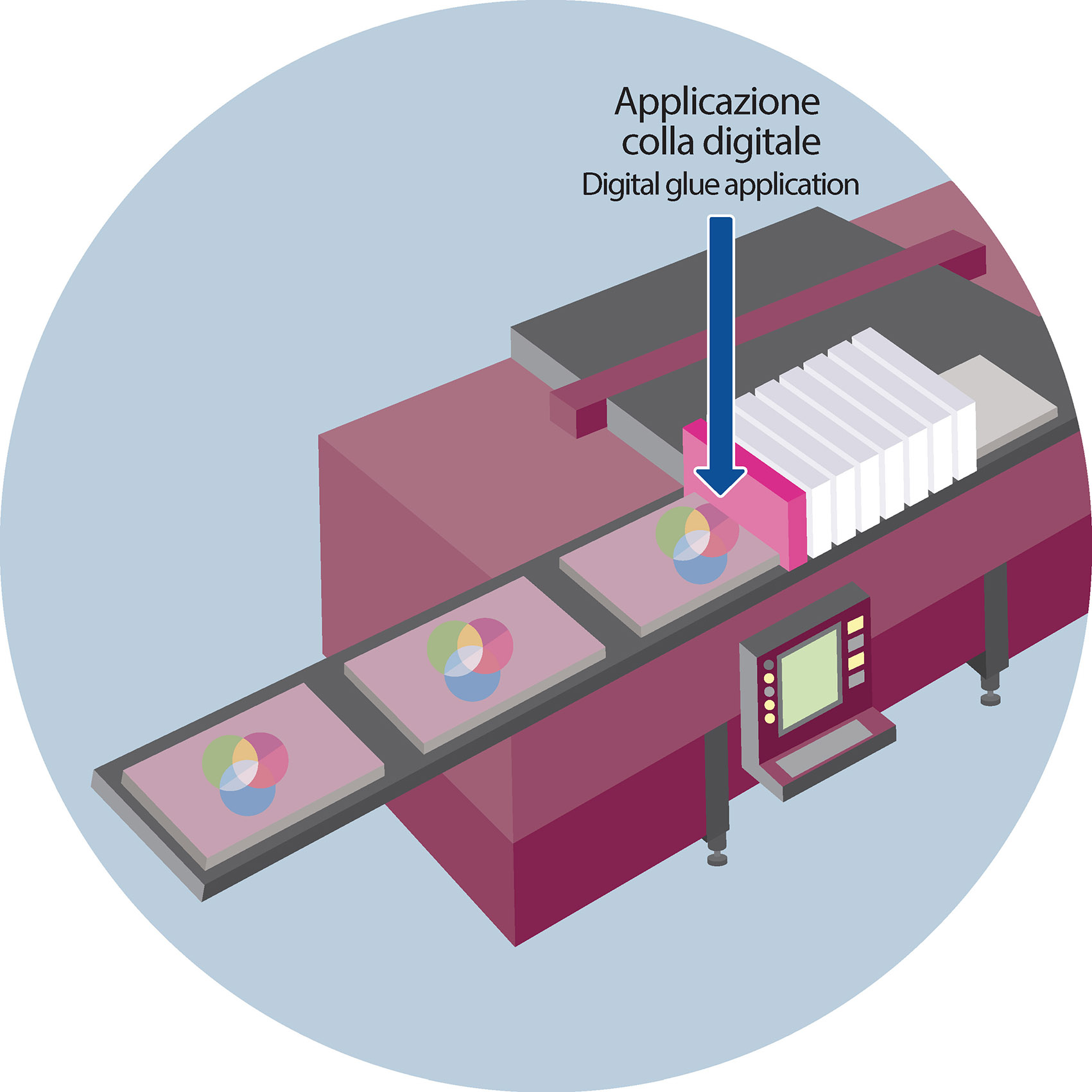
As is well known, there have been for years on the market different kind of DIGITAL GLUES for ceramic production, applied by means of piezoelectric inkjet systems. Although each of them interacts with powders and/or grit in different ways, there are currently two main categories that must be taken into consideration:
- Solvent-based glues (made of non-polar solvents)
- Water-based digital glues (made of polar solvents and water)
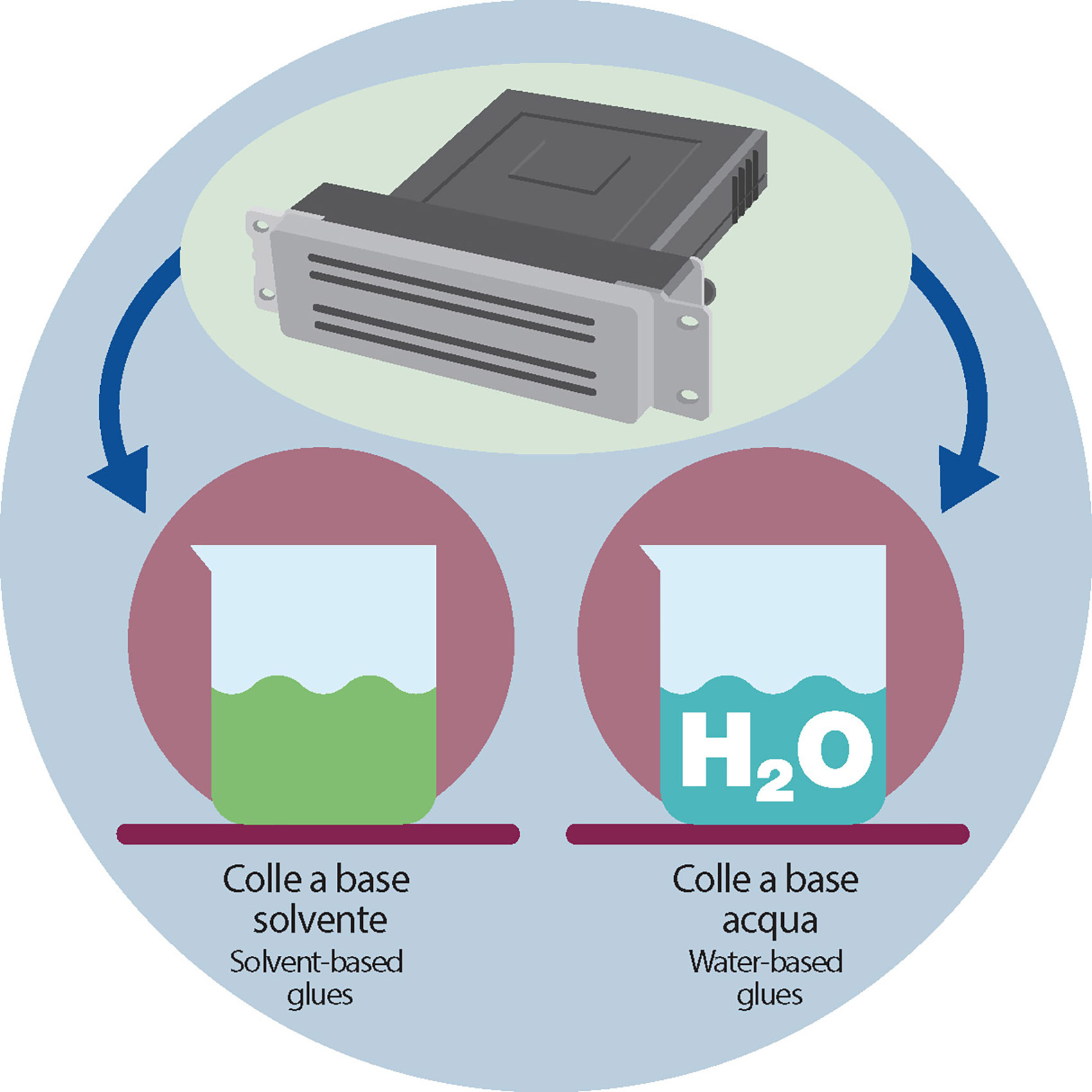
If, on the one hand, solvent-based glues – mainly based on fatty acid esters or glycol ethers – produce exclusively a cohesive action, water-based glues, on the other hand, can promote a real binding effect (film forming / crosslinking) between particles.
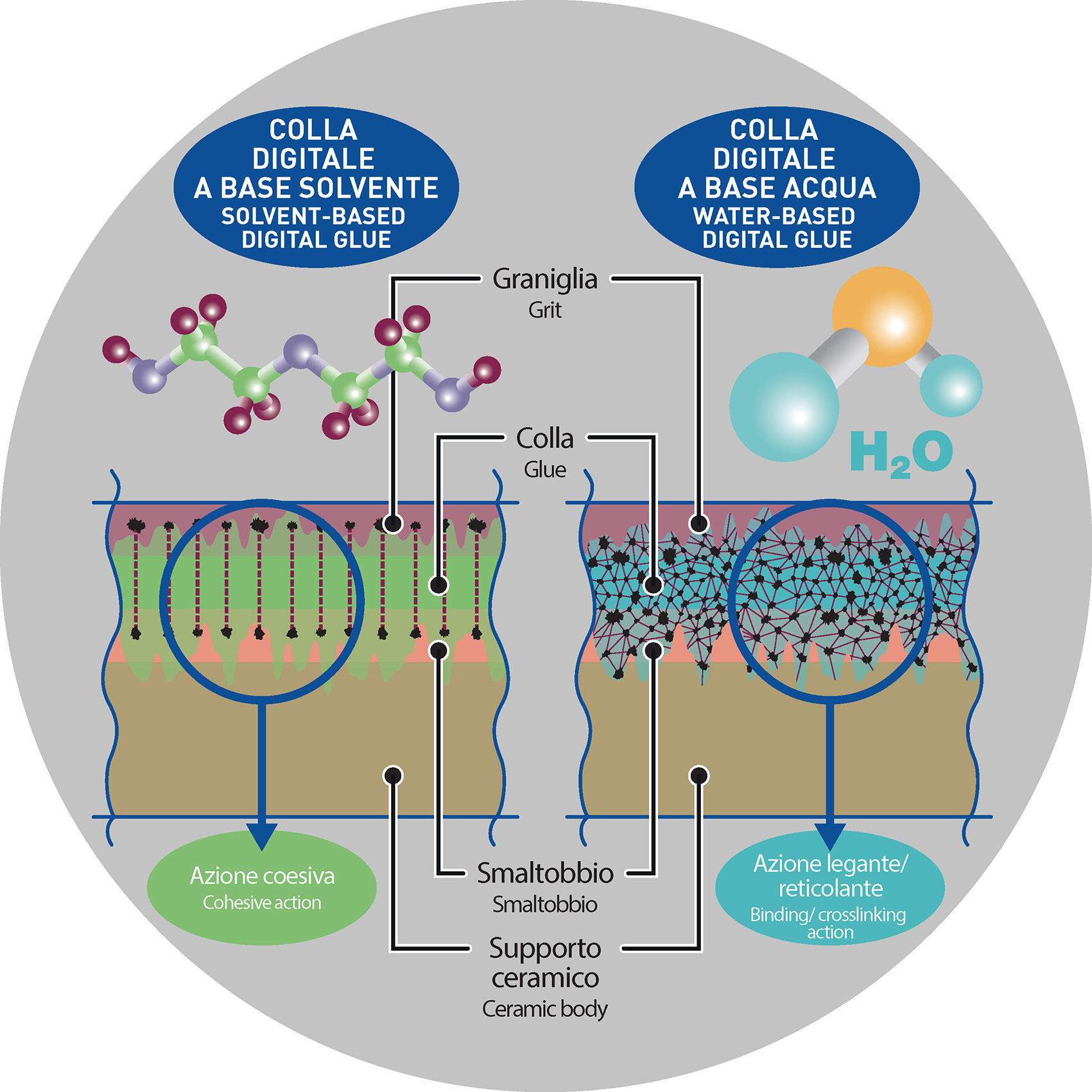
A curious aspect to be highlighted is that – despite the name – digital glues are not real glues. These are products that, of course, can FIX powders and/or grits on the ceramic support but their operation is not comparable to that of an actual glue.
2. Solvent-based digital glues
Solvent-based digital glues, in effect, can be considered as waxes in oil.
Why?
Unlike solvent-based inks, they contain resins and/or soluble molecules in non-polar solvents that do not release a reticulating/film-forming capacity when the glue “loses” part of its solvent, either by absorption (on the support) and evaporation.
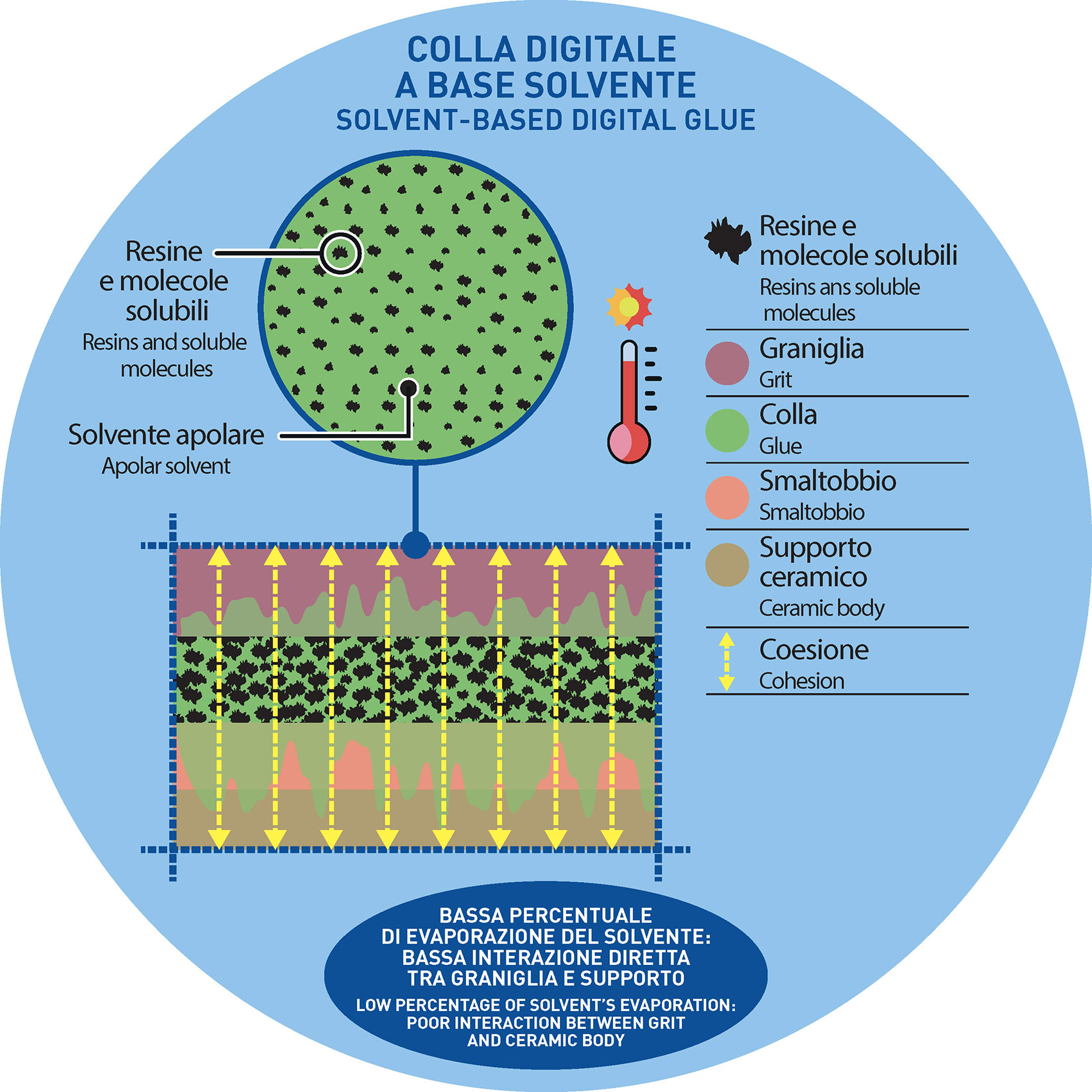
More specifically: when the solvent-based glue is applied, although a small percentage of the NON-POLAR SOLVENT evaporates in contact with the hot raw tile, the glue is almost completely absorbed by the ceramic powders on the support, leaving between the particles the resins and soluble molecules that have the COHESIVE POWER.
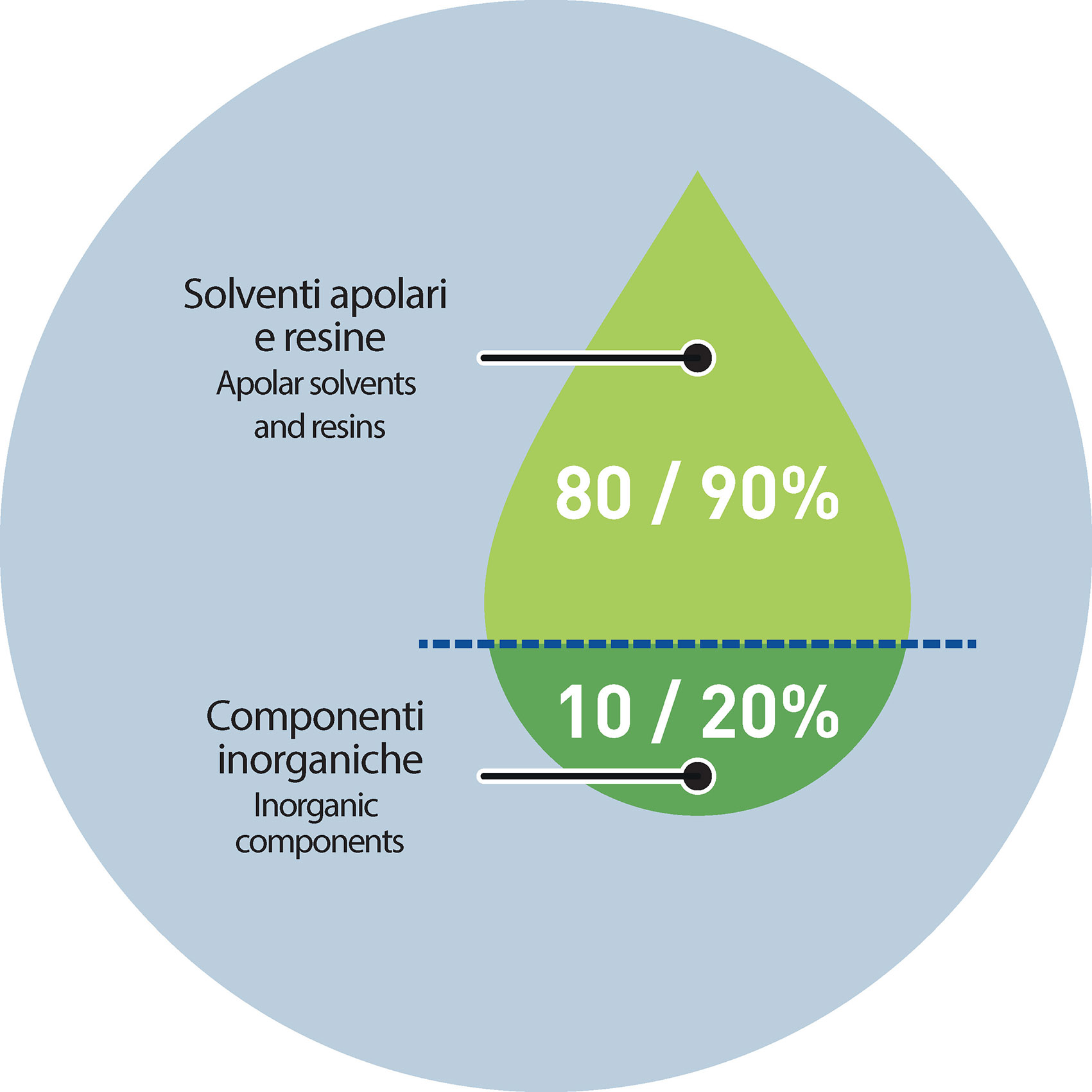
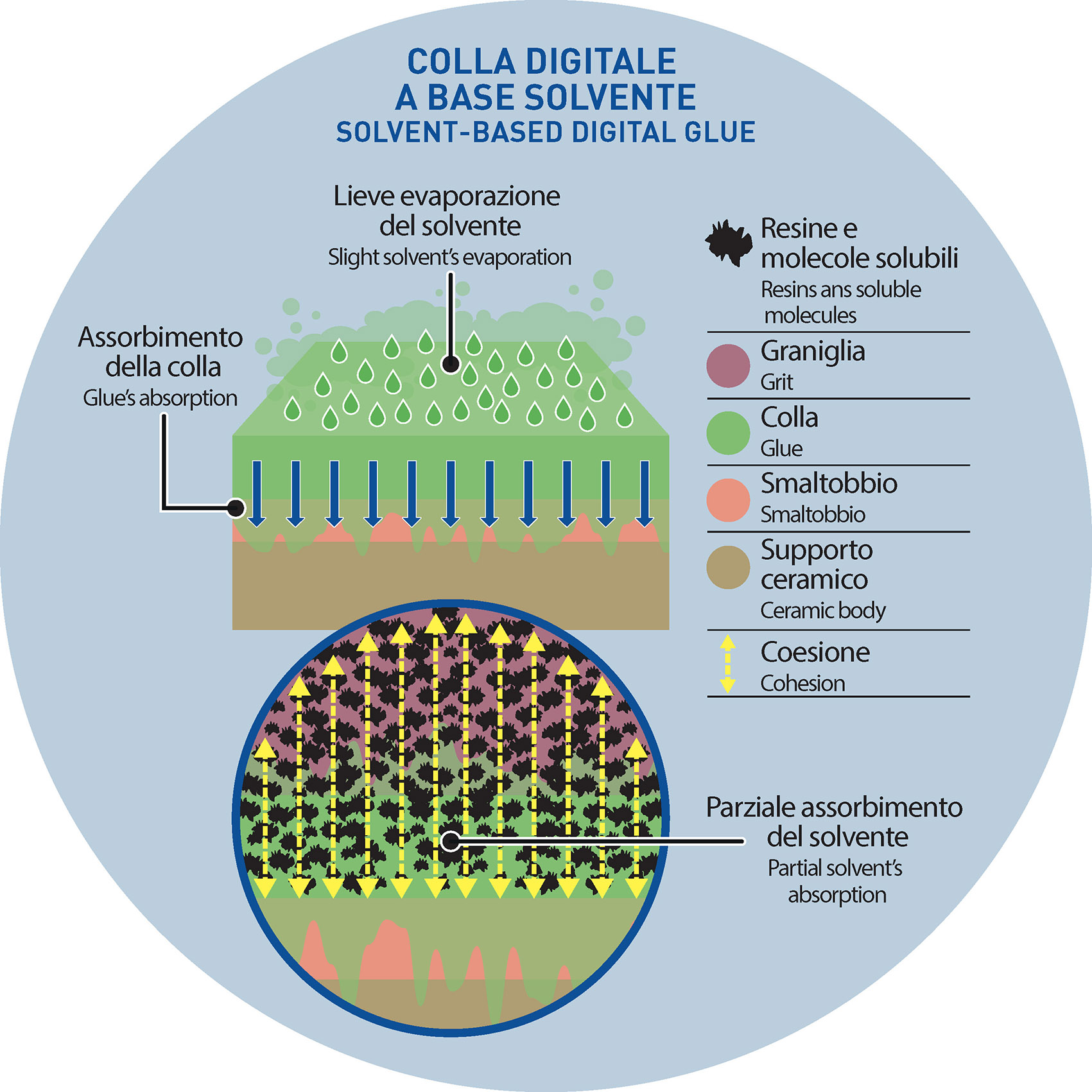
The molecules of solvated resins (we could say “surrounded” by the solvent) are characterized by a cohesive power that produces a “shielding effect” without giving rise to real bonds between the particles (no adhesive power). The resin thus performs as a wax, holding the particles together without binding them. This is the reason why it would be improper the of use the term “glue”.
Why is a real ADHESIVE POWER not produced?
Solvated resin molecules (surrounded) by non-polar solvents – such as fatty acid esters – are in a condition that produces weak interactions with inorganic support materials and ceramic powders/grains. Solvent molecules by their nature have, in fact, few points able to interact with strong bonds (as it happens instead with resins in aqueous environment).
These non-polar solvents (fatty acid esters) are also high-boiling and therefore they cannot be eliminated by evaporation during application. Since they are always present between the resin and the inorganic material of the ceramic support or of the grit, they create a sort of barrier that prevents direct interaction, and therefore a strong bond, between the resin contained in the solvent and both the support and the grit (or vitreous powders).
AD EXAMPLE FROM THE WORLD OF COOKING
Imagine kneading flour and water to make pizza.
The dough turns out soft and sticky (it sticks to your hands).
To prevent this from happening, hands are usually sprinkled with oil to avoid a sticky effect while preserving the cohesion of flour particles.
Translating from cooking to ceramic: the hands are the ceramic support while the pizza dough represents the oil-soaked grit particles (or ceramic powders) that are cohesive but that do not bond to the substrate.
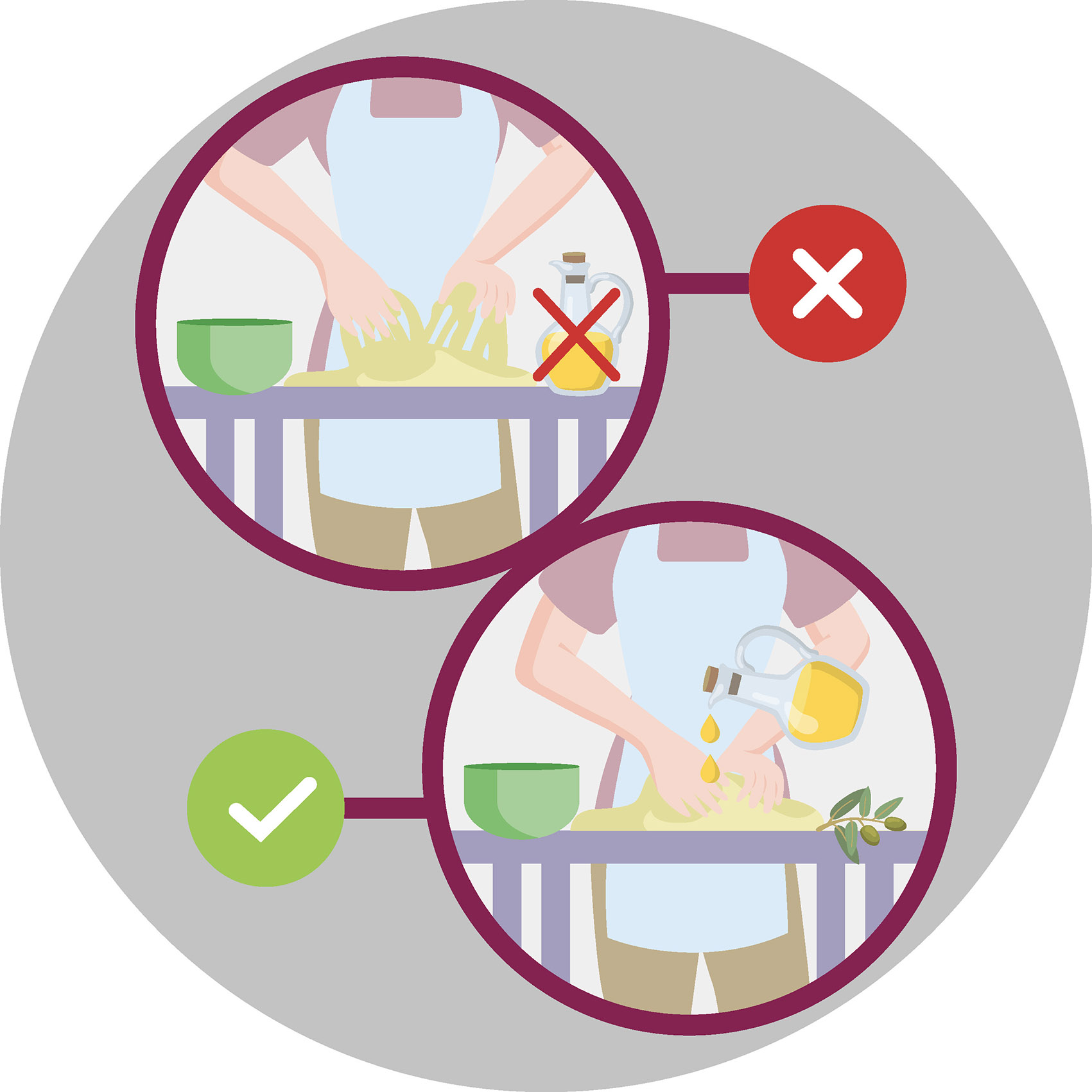
The oil makes the particles cohesive, just as it creates a cohesion between the particles and the support without, however, giving rise to a real bond.
3. Water-based digital glues
From a chemical point of view, water-based digital glues are polar products since they are based on strongly polar solvents and water (which is also polar). Like all polar systems, they have a much higher interaction capacity than any other non-polar product. The resins in the formulations are also properly designed to obtain a strong FIXING/COHESIVE POWER (not adhesive!).
Although even in this case the resins in solution remain partially solvated both during the glue’s discharge on the ceramic support and during its interaction with the following grit application, the mechanisms of action are quite different.
Polar solvents and water “leave” the resins: that is, the solvents tend to be absorbed by the substrate and at the same time evaporate due to the tile’s heat. This process allows the resins in the formula to interact more intimately with the substrate and with the grits, creating much stronger interactions than with solvent-based digital glues.
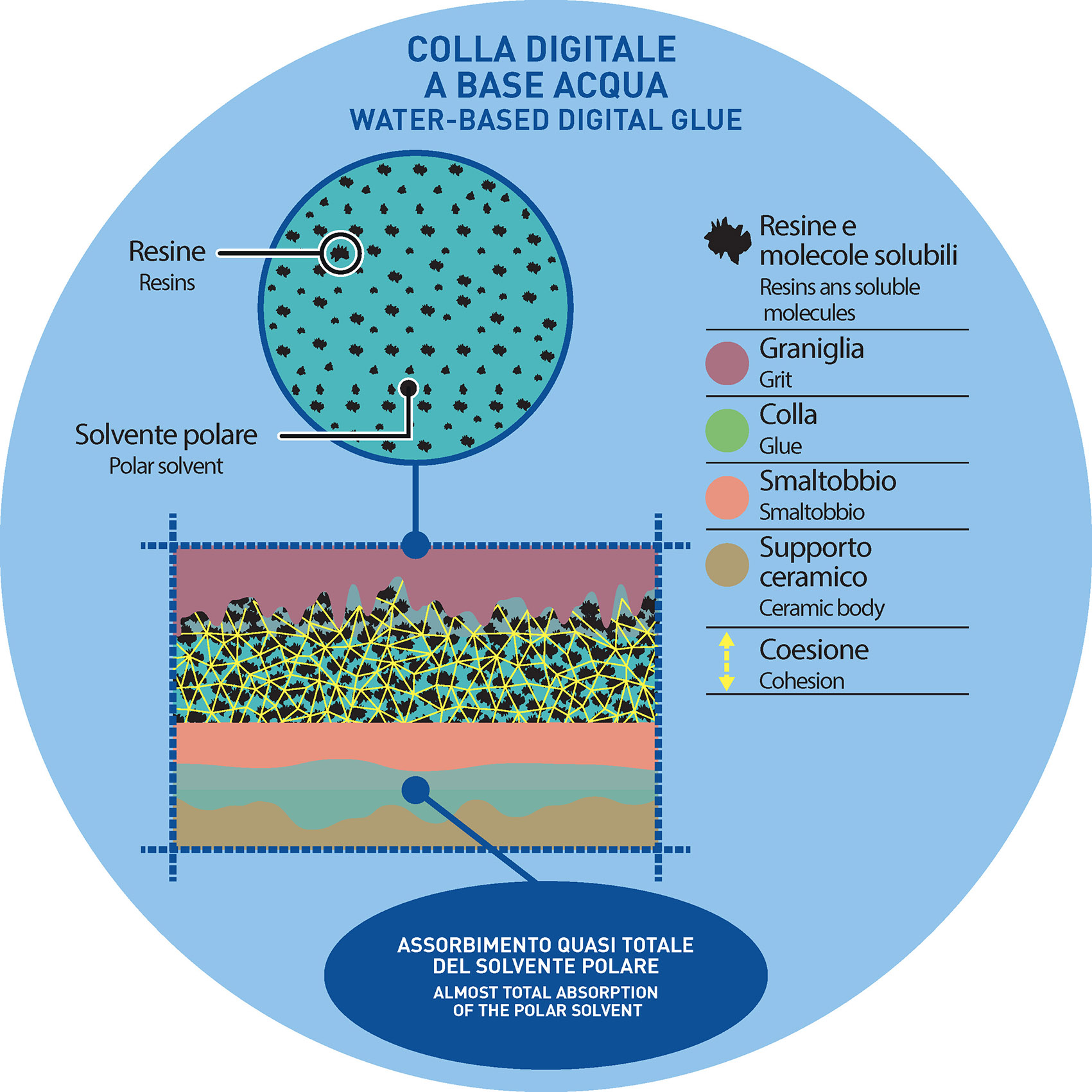
It must also be said that it is quite rare that the polar solvent completely disappears during application. On the contrary, this must not happen since solvents have to ensure the proper lubrication of the print-heads, thus avoiding gelling or encrustation that may compromise a good printing result.
It is therefore clear that, even the use of water-based glues does not produce a real adhesive action.
Although very powerful, these glues develop a cohesive effect promoted by the constant presence of the solvent between particles and therefore inside the system.
4. The near future and Z&S proposal
Considering the clear benefits both in terms of sustainability and technology / application, the future of digital glues can only be based on water. A complex but inevitable choice.
It is important to underline that the water-based technology – already in use in many fields of the industrial production – has only recently found space in the ceramic sector.
Although the subject has been under investigation for several years, both application technology (printers and print-heads) and glues have only recently achieved the right levels of reliability. Levels that can ensure continuous, stable, high-performance results. It is a triangulation made up of dependent variables that cannot be separated from each other.
As part of this new scenario, Zschimmer & Schwarz Ceramco began its research on the water-based system in 2013 pioneering in an area at the time hardly investigated.
In addition to the heterogeneous range of solvent-based glues, the company has therefore focused its attention on high-performance and low environmental impact solutions for the past decade, focusing in two different directions:
- Digital glues without melting component
- Digital glues with melting component
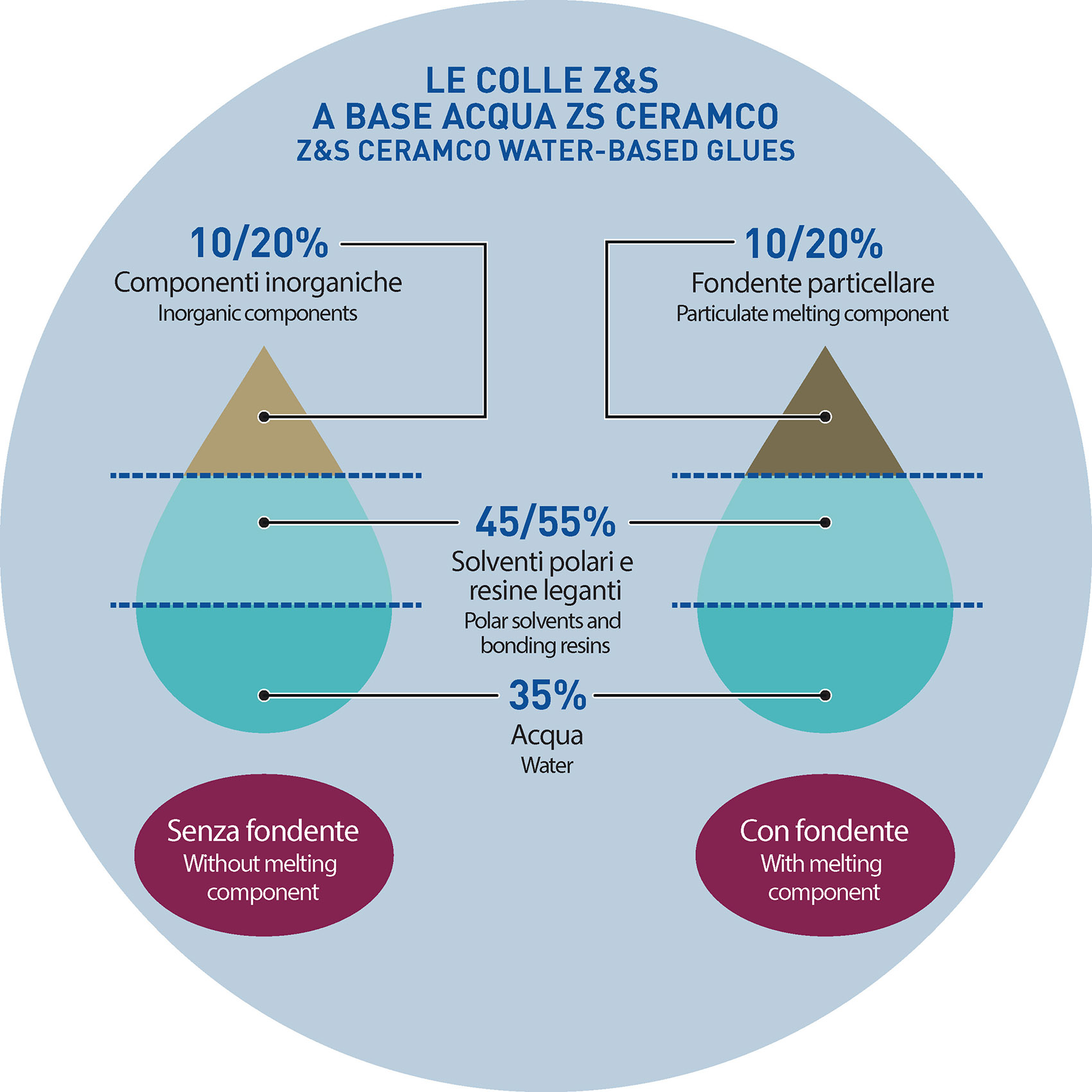
Let’s take a closer look at differences and similarities.
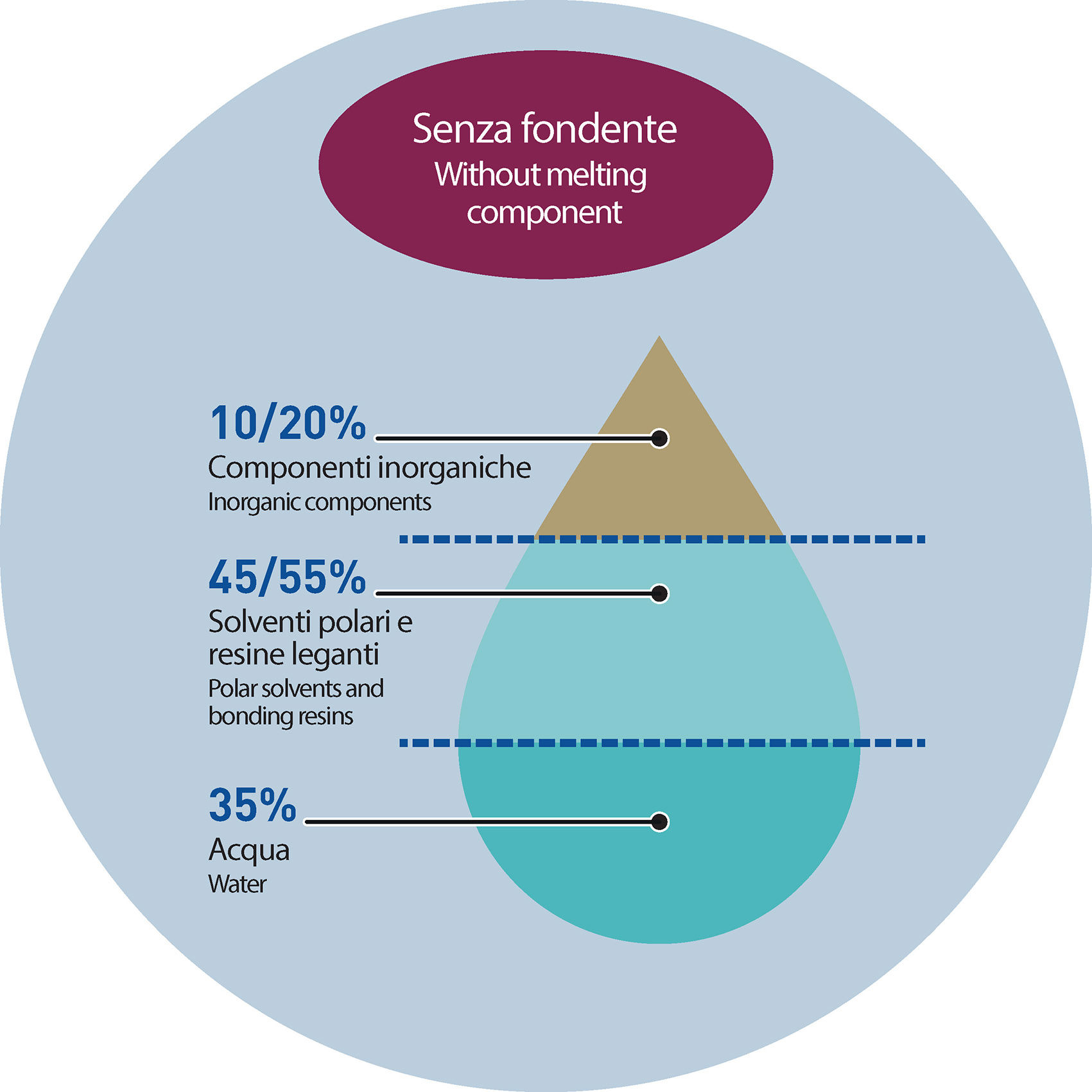
WATER-BASED DIGITAL GLUES (WITHOUT MELTING COMPONENT)
They are transparent liquids (such as cleaners) and consist of polar solvents, water, resins, organic and inorganic polymers. Their formulation allows to FIX the grits (both between the grit’s powders and on the support) with different mechanisms of action in various phases of the production process:
- Along the glazing line (after grit application): developing of strong cohesive power even during pre-firing phase
- During the drying process (or pre-heating step) in the kiln: strong binding power deriving from resins and organic polymers that have completely lost water and polar solvent by evaporation, thus allowing resins to develop their binding action
- During the pre-firing phase: all the organic material decomposes by combustion, leaving only the inorganic polymers that guarantee binding power – between the particles of grit and the support – up to the firing phase
PLUS
CONTINUED OPERATION & MAINTENANCE
Melt-free digital water-based glues provide high levels of reliability in the maintenance of digital printers: since they do not contain suspended particles, they behave exactly like a cleaner, avoiding any problems of filtration or sedimentation within the printheads or circuits and reducing any possible fouling of the nozzle plate. The risk of application problems is very low.
MINUS
FUSIBILITY
Although it contains inorganic polymers that facilitate during firing the fusibility of the grit on the layer previously applied on the support (smaltobbio), melt-free water-based glues may not be fully effective in fusibility, sometimes producing sub-optimal results during firing or, in more isolated and problematic cases, a real lack of fusibility between glaze/smaltobbio and grit. Critical issues normally appear when:
- The glaze/smaltobbio is refractory and with a low fusibility (we could vulgarly say when it is “harder” than usual)
- The grit has improper viscosity and fusibility values (we could improperly say that it “stands still”)
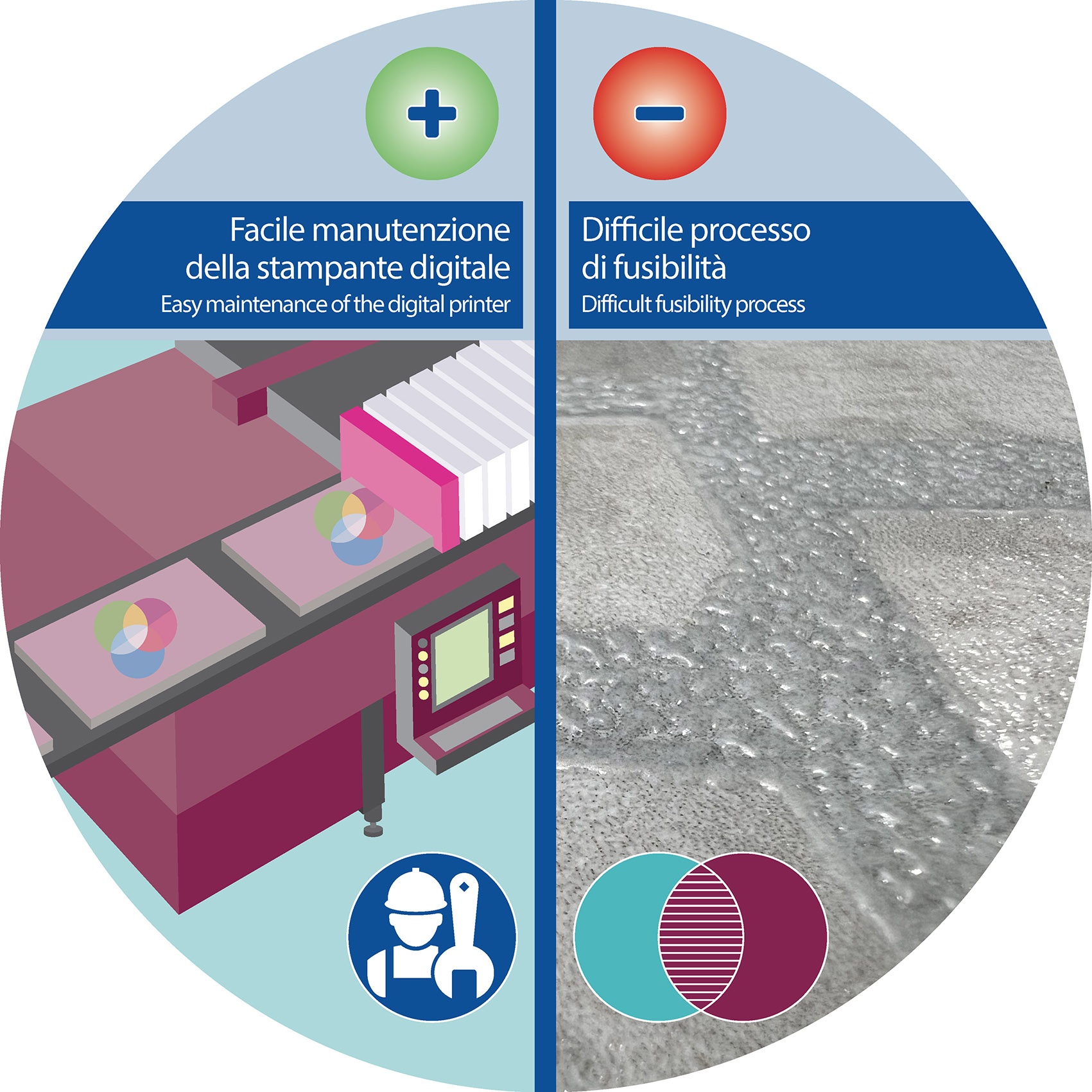
Basically, the two aspects mentioned above prevent an adequate integration in the interphase between glaze/smaltobbio and grit, leading to a separation between the two systems. In the best cases, this lack of integration can result in difficult laying of the grits, which after firing may look like hammering. In the most serious cases, it is possible to see real lack of the grit that allow to see the underlying glaze/smaltobbio.
In all these cases the problem can be clearly solved by an accurate study of the glaze and grit formulations to increase the compatibility level (and therefore fusibility) during the firing process.
WATER-BASED DIGITAL GLUES (WITH MELTING COMPONENT)
PLUS
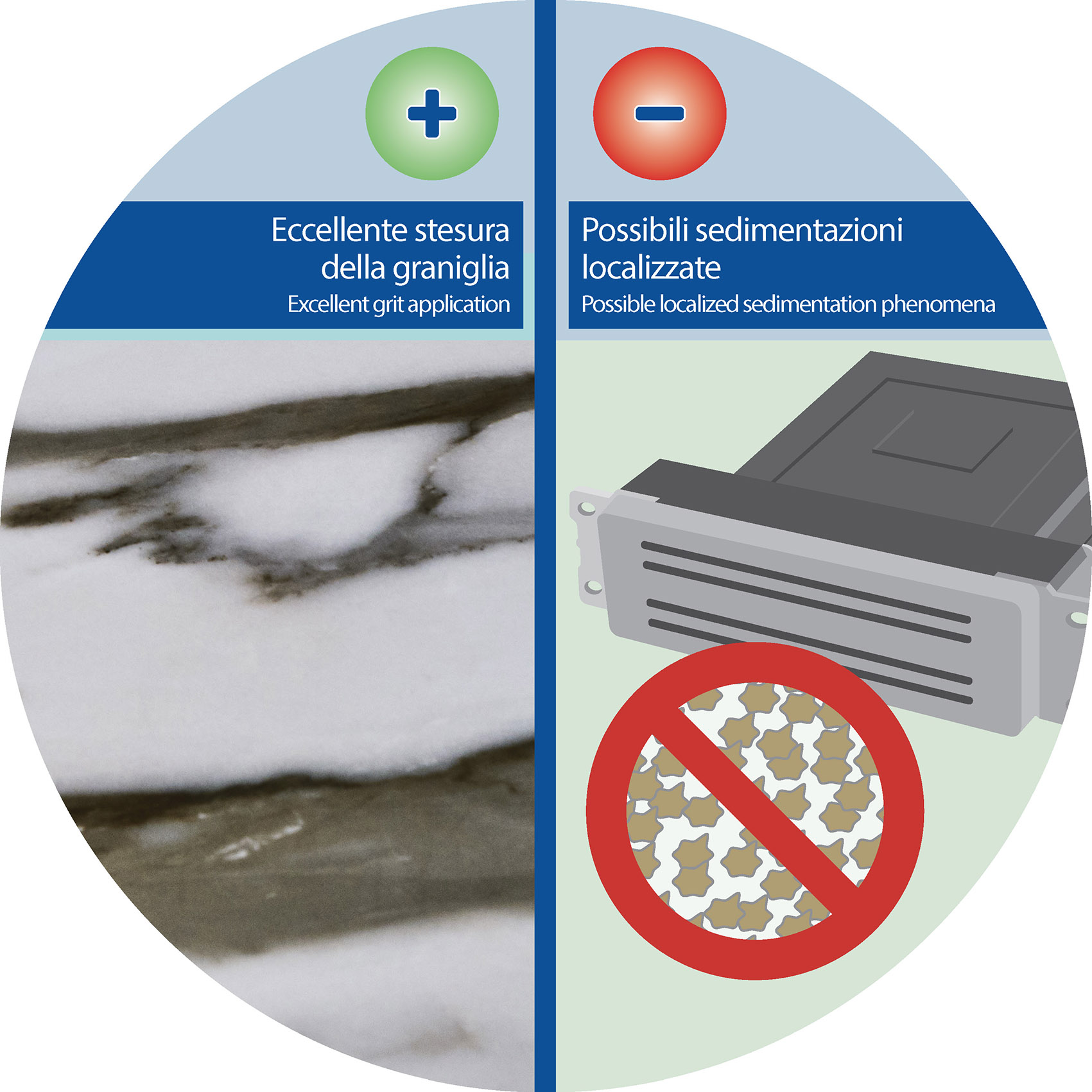
PROPER LAYING AND LEVELING OF THE GRIT
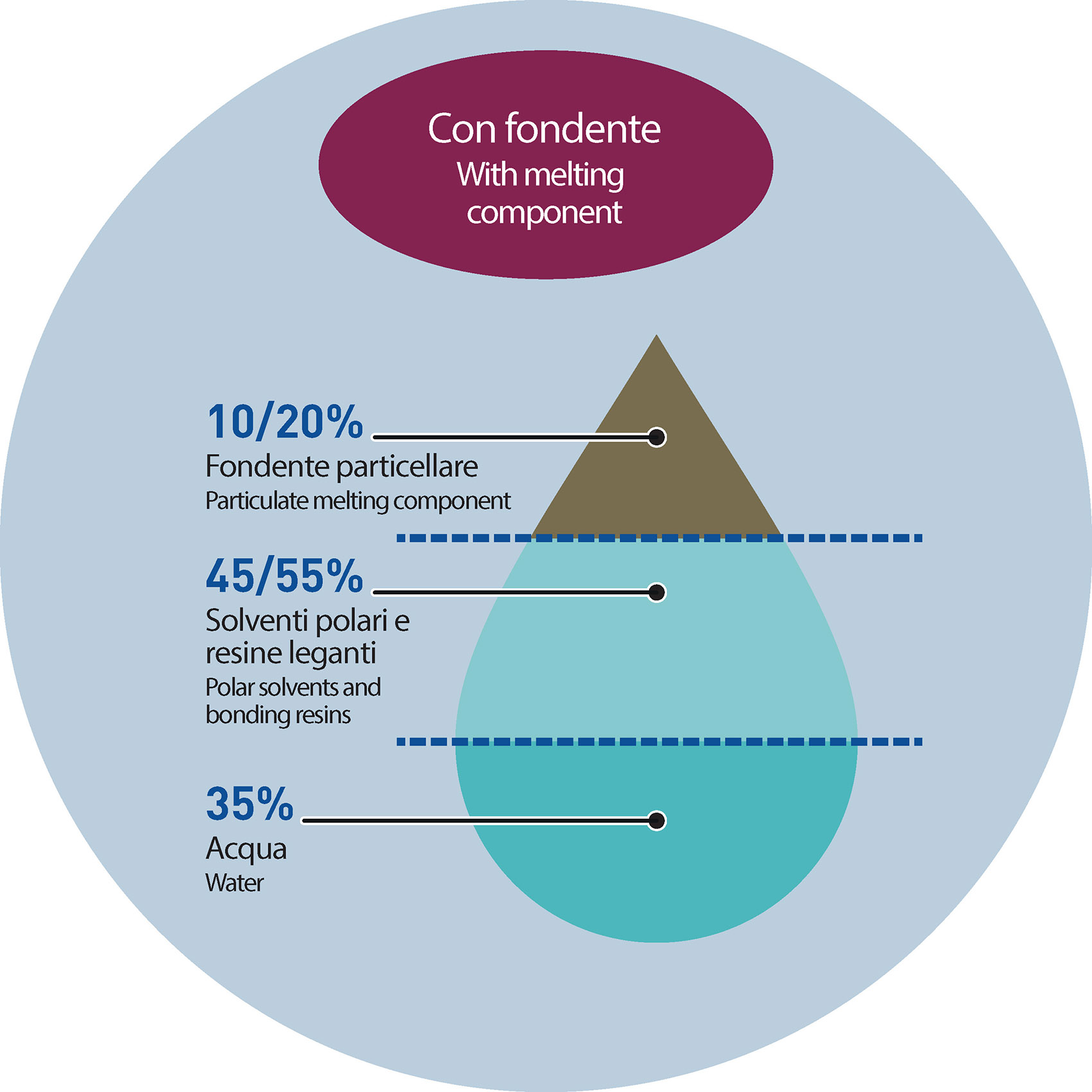
To easily avoid this problem, it is recommended to add the glue with an inorganic melting component capable of interacting in the interphase between the glaze and the grit, generating a lower melting area that contributes to develop a more intimate bond between the two. The consequence of these chemical actions is a better uniformity of laying and levelling of the grit.
MINUS
LOCALIZED SEDIMENTATION PHENOMENA & DIGITAL PRINTERS MAINTENANCE
Since they contain inorganic particles in suspension, water-based digital glues with melting component have characteristics like those of the corresponding inks. This means that it is necessary to take the same precautions, paying particular attention to possible localized sedimentation phenomena. It is also necessary to pay more attention to the maintenance of the printer by regularly changing the filters and inspecting the most sensitive parts.
This does not mean that glue with melting component gives rise to production problems. It simply requires greater attention since its management is more demanding. For this reason, it is always advisable, during R&D, to study glazes, smaltobbi and grits that, in combination with a glue without fondant, can produce the expected results.