#38 Carboxymethylcellulose: what is it for & how to use it?



- Introduction
- Chemical-physical properties
- Functions
- Controindications
1. Introduction
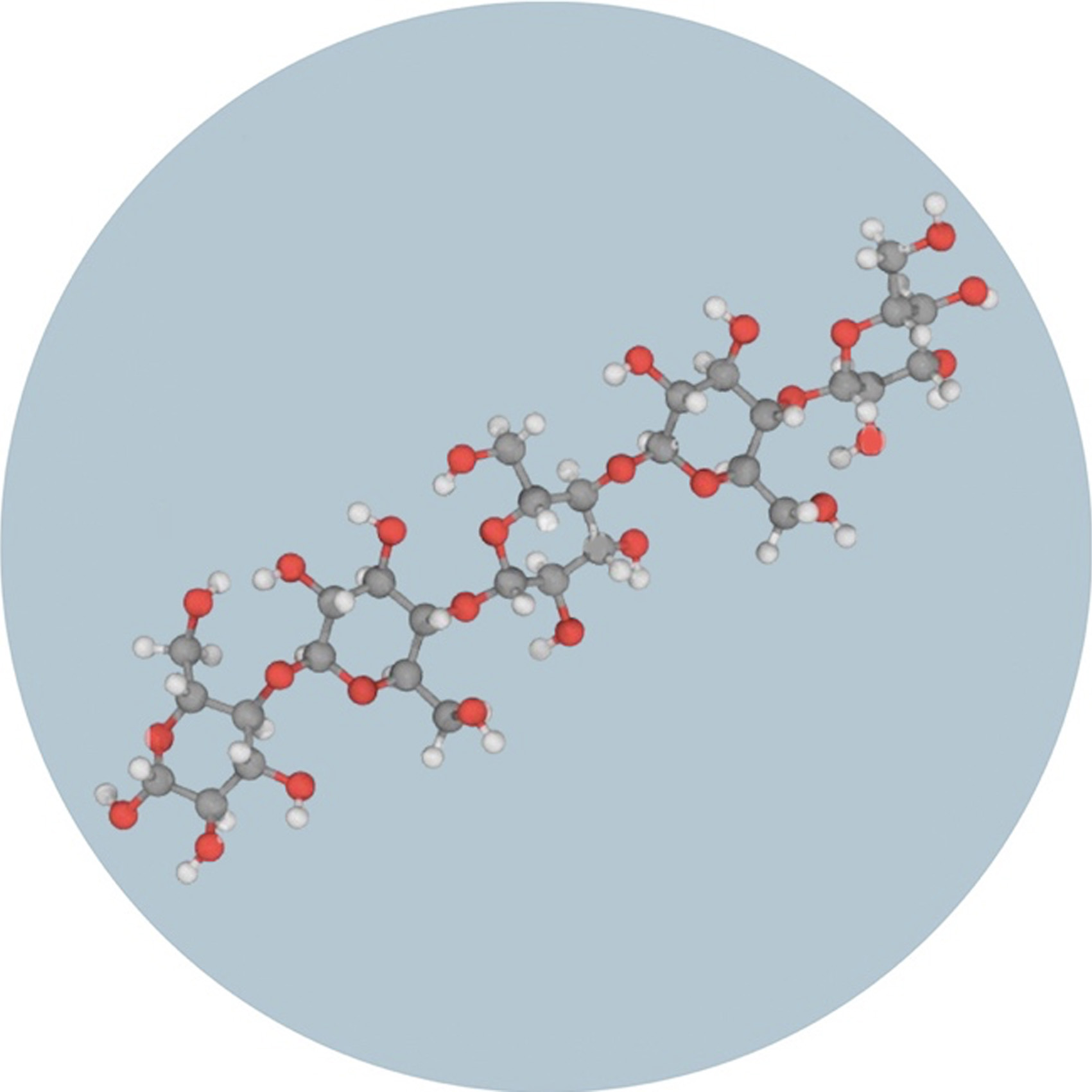
Carboxymethylcellulose are organic compounds, water-soluble polymers derived from cellulose, widely used in several fields of industrial production. One of the most well-known applications is in the food industry, where – under the designation E 466 – they serve as thickening and stabilizing agents.
Polymer, from the Greek ‘having many parts’: macromolecule. A molecule with a high molecular weight, consisting of numerous molecular groups (or structural units) linked together in a chain through the repetition of the same type of bond.
Even in ceramics, sodium carboxymethylcellulose perform multiple functions within suspensions and solutions and can exhibit very different properties depending on the circumstances.
2. Chemical-physical properties
CMC usually appears in the form of a whitish (or yellowish) granular powder and, unlike cellulose, is completely soluble in water. Its hydrophilic nature is precisely what allows for its broad and versatile use. When mixed with water, CMC typically forms a stable anionic gel (anions: a chemical species consisting of one or more atoms that have gained one or more electrons – which carry a negative charge – thus becoming negative ions).
In general, among the various properties that characterize them, CMCs are notably distinguished by their strong adhesive power and their ability to affect the viscosity of a system.
However, each CMC has its own qualities that distinguish it from others. For this reason, when they are used in the ceramics field, it is important to make an appropriate selection based on the features of the suspension involved in the production process.
VISCOSITÀ
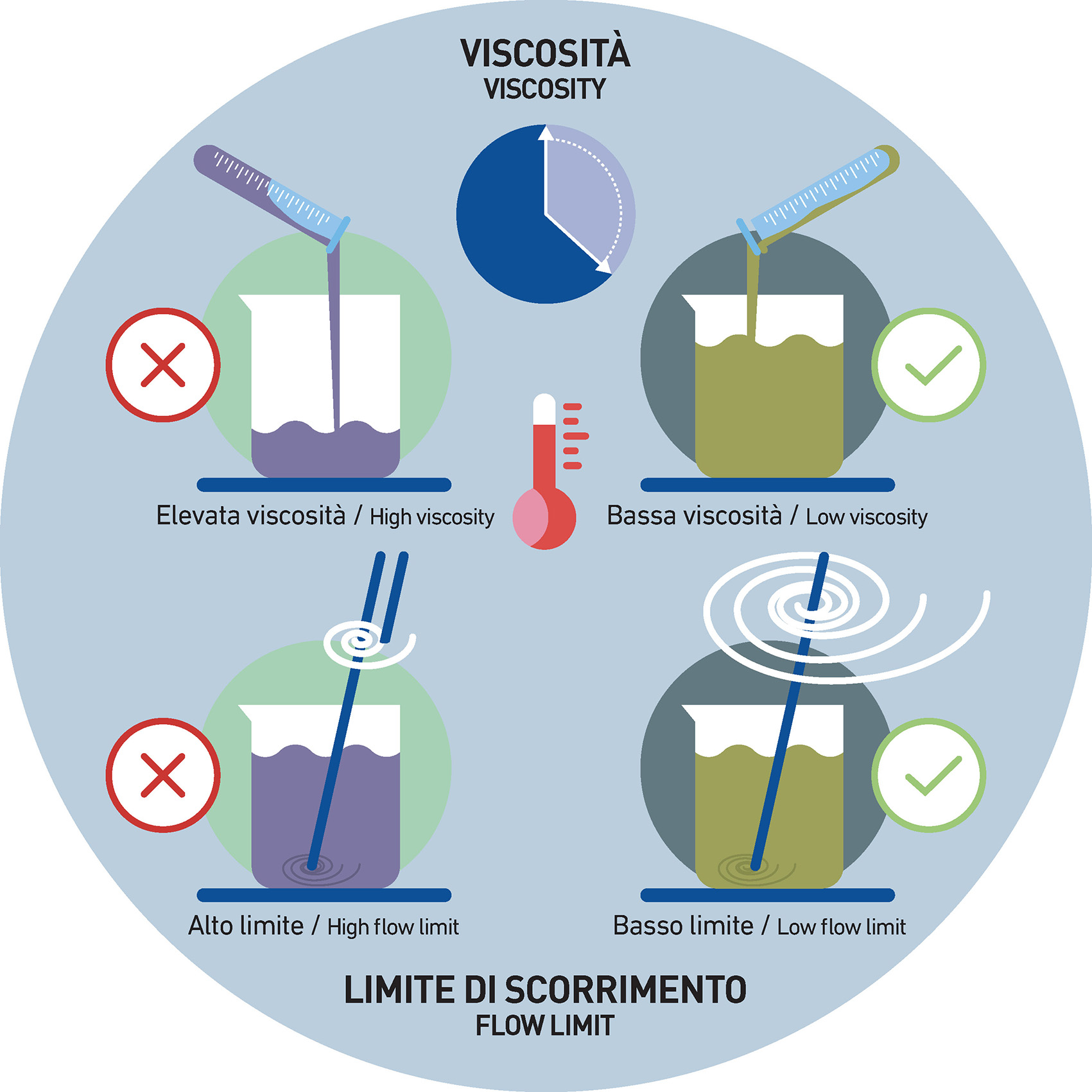
Viscosity (or coefficient of viscous friction) is a quantity that measures the tendency of a substance – generally a fluid – to generate internal friction between its layers. In other words, it defines a fluid’s resistance to flow. In liquids, the coefficient of viscosity is generally inversely proportional to temperature: as the temperature increases, the viscosity decreases. From a microscopic and thus particulate point of view, the viscosity value depends both on the shape and size of the molecules and on the type of interaction that occurs between them.
3. Functions
In the presence of a very plastic glaze (and therefore a glaze whose viscosity and cohesion values are inherently high), it would be advisable, for example, to use a low-viscosity CMC or to reduce the dosage.
An extremely lean glaze, meaning a glaze that is not very plastic (low in clay content), would require instead CMC marked by higher viscosity to ensure proper cohesion and appropriate drying on the tile.
- Low-viscosity CMC: carboxymethylcellulose provides a slight fluidizing effect, which minimally reduces drying times
- High-viscosity CMC: it also increases anti-settling strength and further slows down drying times. It is important to highlight that an increase in temperature can cause a decrease in viscosity, promoted by the interaction between CMC and water
The technician’s choice of product is often driven by personal considerations and testing. There are no products with characteristics that are significantly better than others: it is necessary to evaluate each time the specific scenario and take actions with a tailored solution.
In general, both the type of selected CMC and the quantity can affect the drainage and evaporation times of the water content in the suspension, increasing or decreasing them as needed.
In this regard, the temperature of the ceramic support on which the glaze is applied (the operating temperature) is an important parameter to consider when selecting the CMC.
The CMCs used in ceramics, particularly within glaze and engobe suspensions, affect the rheology, also acting on the cohesion of the solid particles in suspension.
This kind of action inevitably results in easier (or more appropriate) grinding and better, simpler application of the suspension on the glazing line. The viscosity value, in fact, is an extremely sensitive parameter when it comes to proper applicability.
In addition to their effect on viscosity and cohesion, some CMCs – in very specific case – can serve a dispersing function due to their interaction with the suspended particles, preventing agglomeration and ensuring stability to the system.
4. Contraindications
While facilitating some steps of the production process, CMS may bring out some contraindications.
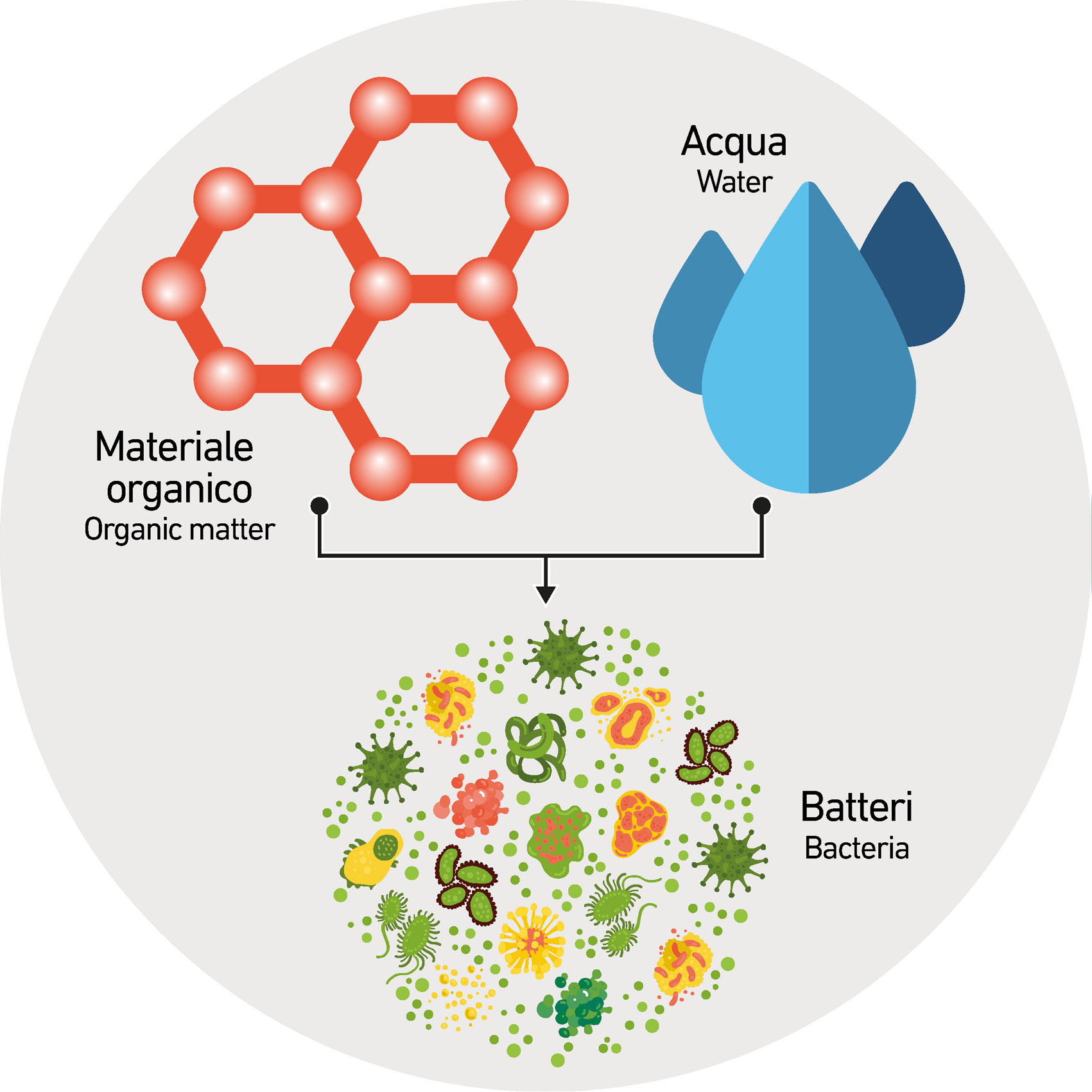
The most important issue concerns their easy degradation, which is mainly due to their organic and natural nature that makes them easily susceptible to bacterial attack. This is why it is often advisable to use them in combination with antibacterial agents and preservatives.