#70 The technological evolution of ceramic grit binders



Introduction
In the ceramics industry, granule binders are often seen as purely functional products — something that simply holds the granules in place on the tile before firing. Their role is far more complex. They sit at the heart of a delicate balance involving rheology, application methods, material composition, and production line setup.
It is precisely this complexity that gave rise to the GRANICER range over time — not as a single, linear project, but as a gradual layering of solutions, each developed in response to specific production needs.
Today the range is organized into four main families — Series 6, Series 7, Series 9, and Series S — which are not simply product variants, but genuine technological responses to different moments in the evolution of ceramic manufacturing.
In terms of chemical composition, the series also differ in their components: some are based exclusively on organic polymers, while others incorporate selected inorganic components that actively contribute to the rheological behavior of the system. This distinction goes beyond formulation — it directly influences how each product interacts with the granules, the production line, and the process conditions. It is therefore a useful way to understand the logic that sets the families apart, beyond their individual application performance.
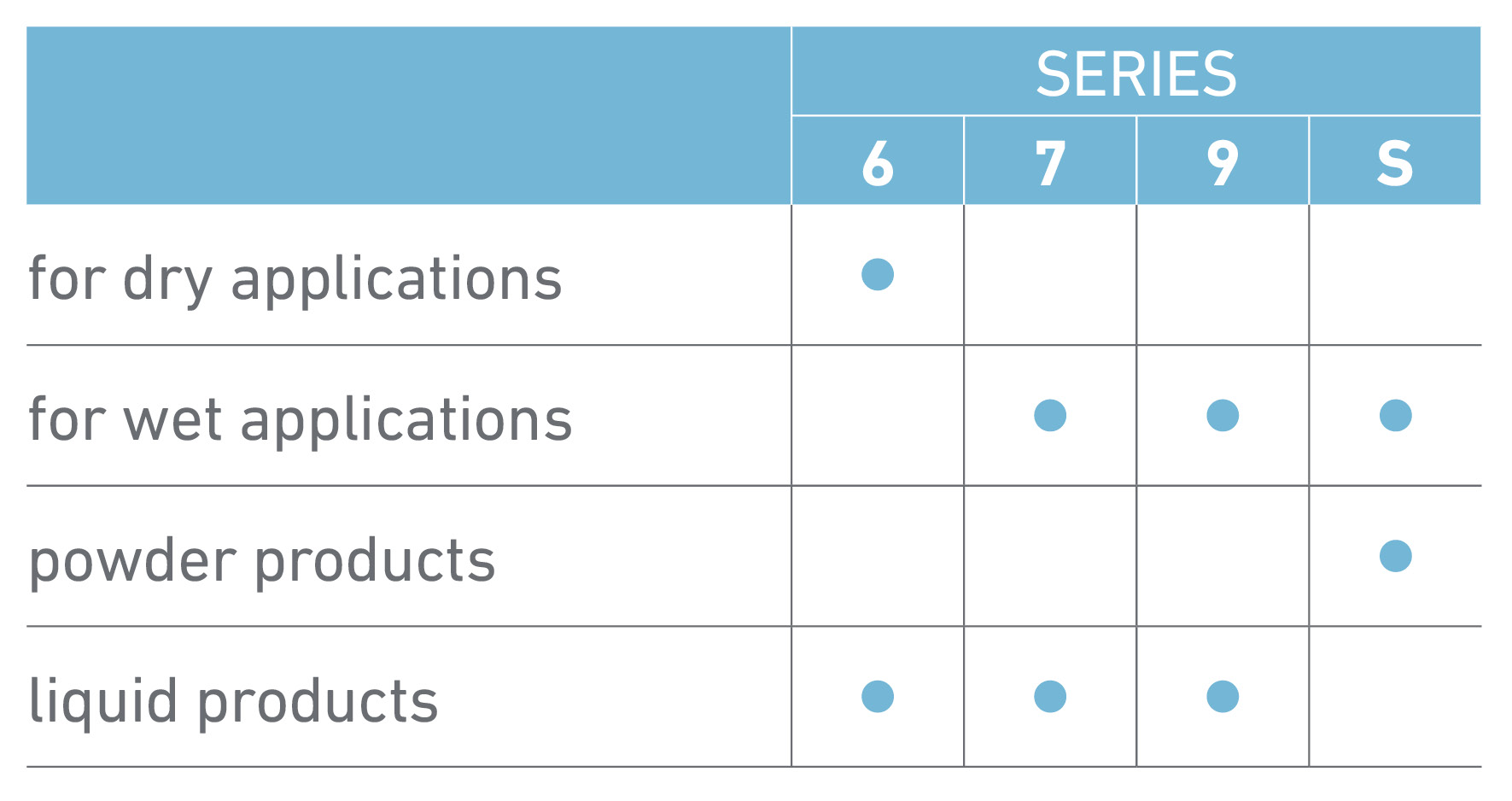
To understand the logic behind the range, it is essential to start from a key concept that emerges clearly from application experience: binding strength is not the main criterion for product selection. In most cases, once the granules have been applied, they are not subjected to the kind of stress that would require strong adhesion before firing. They are not blown off; they are not aggressively moved — so the ability to “hold” is not the real differentiator.
What truly matters is managing the rheology of the system: the binder’s ability to control viscosity, keep solid particles in suspension, ensure proper wetting of the granules, and allow for an even application. This balance is extremely sensitive to the production environment. No two lines are the same, and factors such as air circulation, distances between machines, application methods, and equipment configuration can lead to completely different results with the same product. It is not uncommon for the same binder to work perfectly on one line and cause problems on another.
A real-world example involved a Series 9000 product that worked correctly on one line but caused granule displacement on another due to the presence of fans. In that case, it was necessary to step in and develop a customized formulation — proving that results always depend on the specific line and conditions.
Dry applications
SERIES 6 was specifically developed for dry grit application using shot blasting machines, and it emerged alongside — though somewhat tangentially to — the spread of digital printing technologies. The driving need behind its development was to improve the quality of ceramic surfaces, particularly in dark colors, where traditional technologies sometimes failed to produce a compact, uniform glaze, resulting instead in porous or hazy finishes. The solution was an airless-applicable adhesive capable of creating a uniform bed between the digital decoration layer and the granule application, promoting effective fusion during firing.
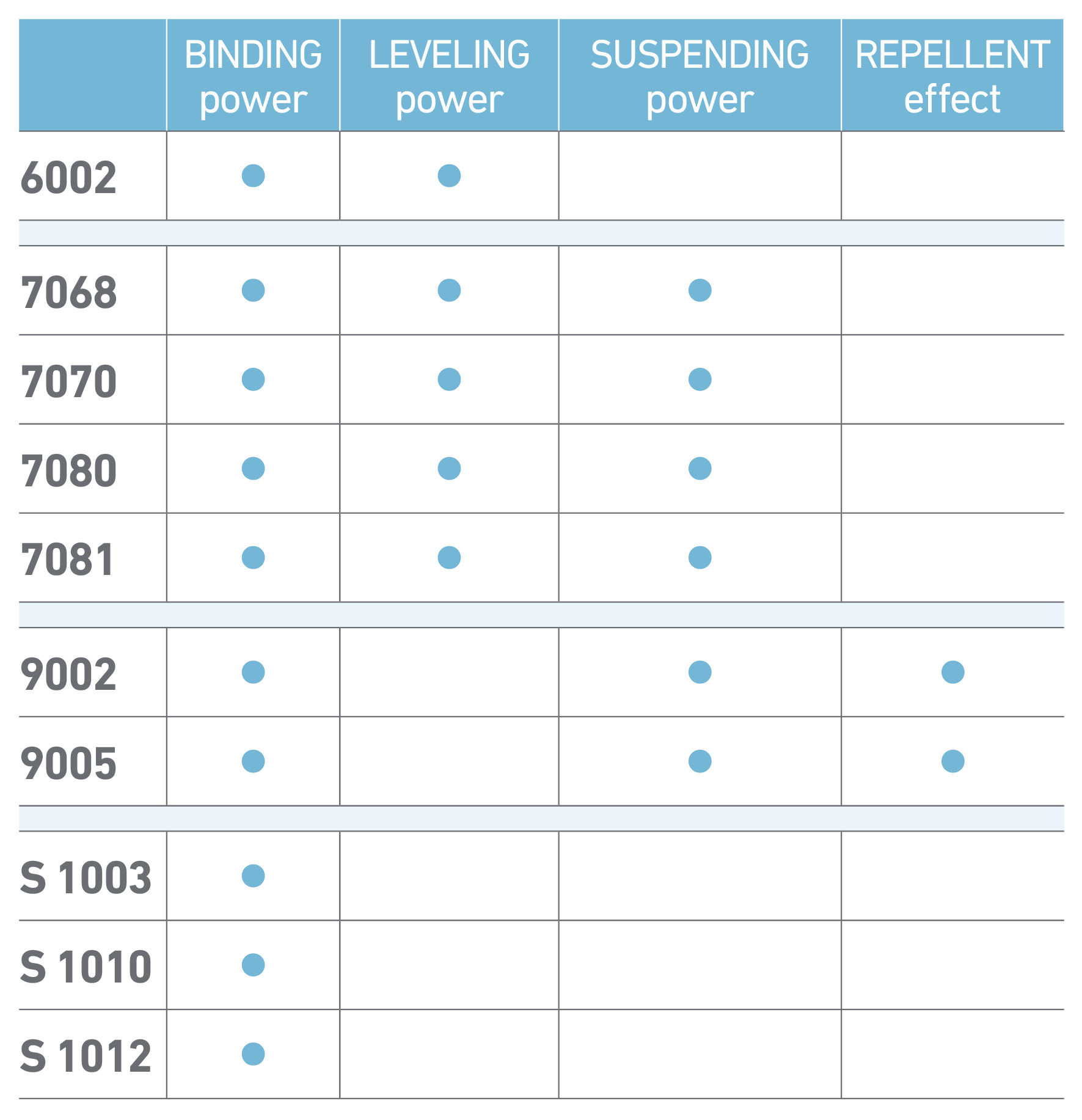
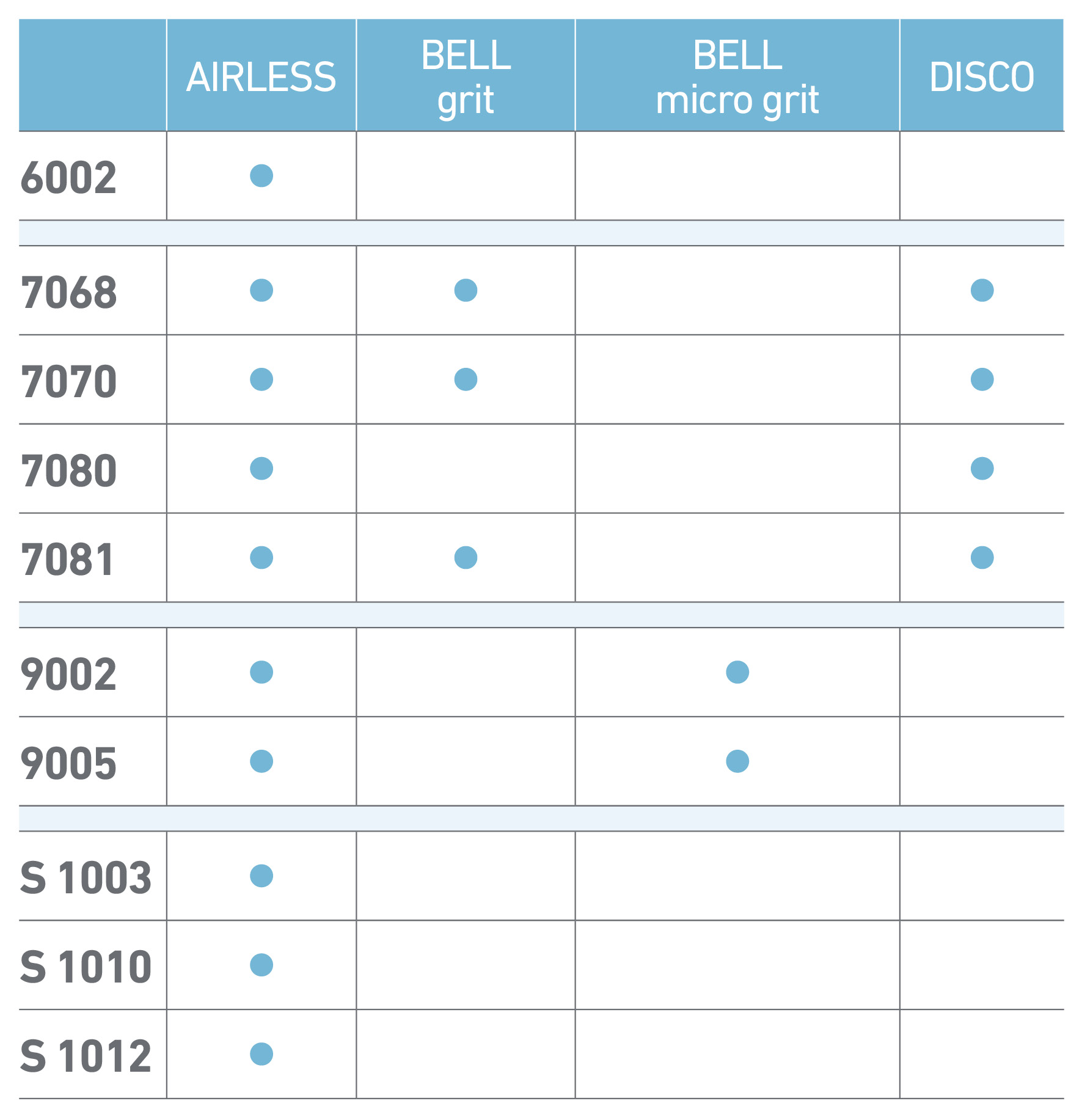
One of the most interesting aspects of Series 6 becomes clear when compared to digital technologies. Digital adhesives, due to limitations related to print heads and emissions, typically work with application weights of around 100 grams per square meter. Series 6, by contrast, allows for much heavier applications — up to 350 or 400 grams per square meter. This makes a significant difference, as it enables complete wetting of the granules and their deep penetration into the liquid phase, producing what is often referred to in production as the “sand effect.” Under these conditions, the grit is fully embedded and stabilized — something that digital technology, by its very nature, cannot achieve when working with thick layers. This is why, even after the introduction of digital technologies, Series 6 continues to be used both as a primary system — especially for surfaces destined for polishing — and as a fixing agent.
The series has evolved over time, with more recent developments improving its sustainability profile through the removal of glycol-based components, while retaining its core philosophy of simplicity and robustness.
Wet applications
SERIES 7 has long been — and remains — an established benchmark for wet granule application. It introduces a key distinction between low-weight and high-weight applications. In low-weight applications, densities are typically around 1,350 grams per liter, with a composition where the liquid phase predominates and the granules represent a smaller fraction. Application weights are modest, generally between 25 and 40 grams on a 30×30 or 33×33 cm tile, producing light or lightly textured surfaces. In high-weight applications, density rises to between 1,450 and 1,500 grams per liter, the solid component becomes dominant, and application weights can reach 80 to 110 grams on the same tile formats — making the surface suitable for subsequent polishing.
This evolution brought increasing complexity in system management. Series 7 is designed to keep large quantities of solid material in suspension, and in some line configurations this requires the integration of fluidizing additives to optimize spreading and achieve the desired result. In earlier applications, surfaces had a deliberately irregular texture — the so-called orange peel effect. As the market shifted towards smoother, more uniform surfaces, managing these additives became an integral part of the application process.
SERIES 9 represents a newer generation of binders, developed to meet more recent market demands. The rheological behavior of this product family is closer to that of a glaze, allowing work at very low viscosities without compromising suspension stability or causing sedimentation. This makes Series 9 effective across a wide range of applications — both high and low weight — with a degree of flexibility that suits diverse production environments, often without the need for systematic use of external additives to manage spreading.
GRANICER 9002, for example, delivers smooth, even application while maintaining high stability. It was originally developed for micro-granule applications and soft-touch surfaces, where precision and consistency are critical.
A further development within Series 9 is the ability of certain products to work in combination with structured effects and digital systems. In this case, the binder does more than fix the granules — it actively contributes to the creation of the aesthetic effect, helping to “open” the glaze and generate three-dimensional structures. Its versatility is reflected in the ability to adjust the outcome simply by varying the percentage used, moving from polished to structured applications without changing the product. This approach responds to a growing need in the industry: reducing the number of products on the line and working with more flexible systems.
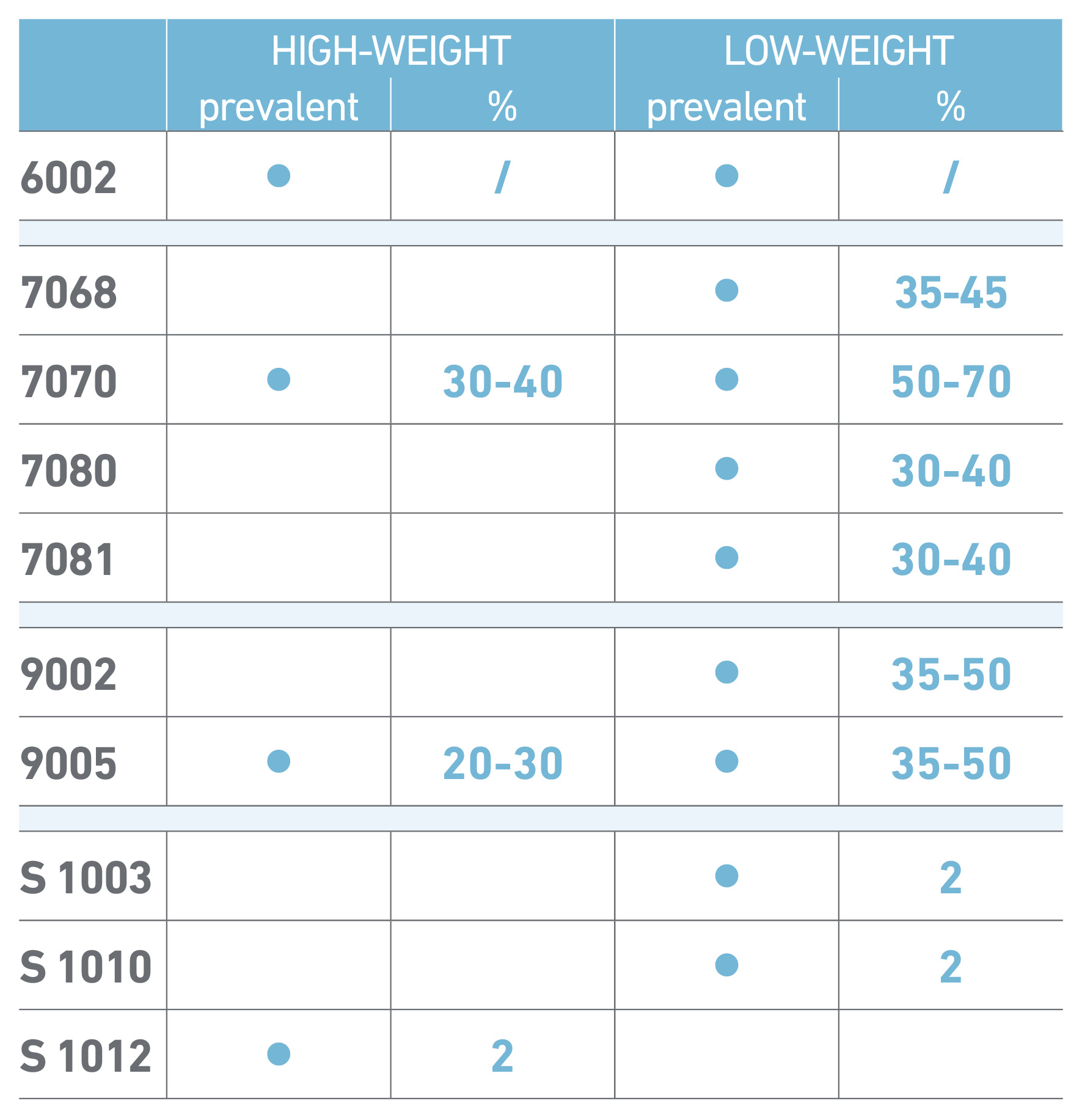
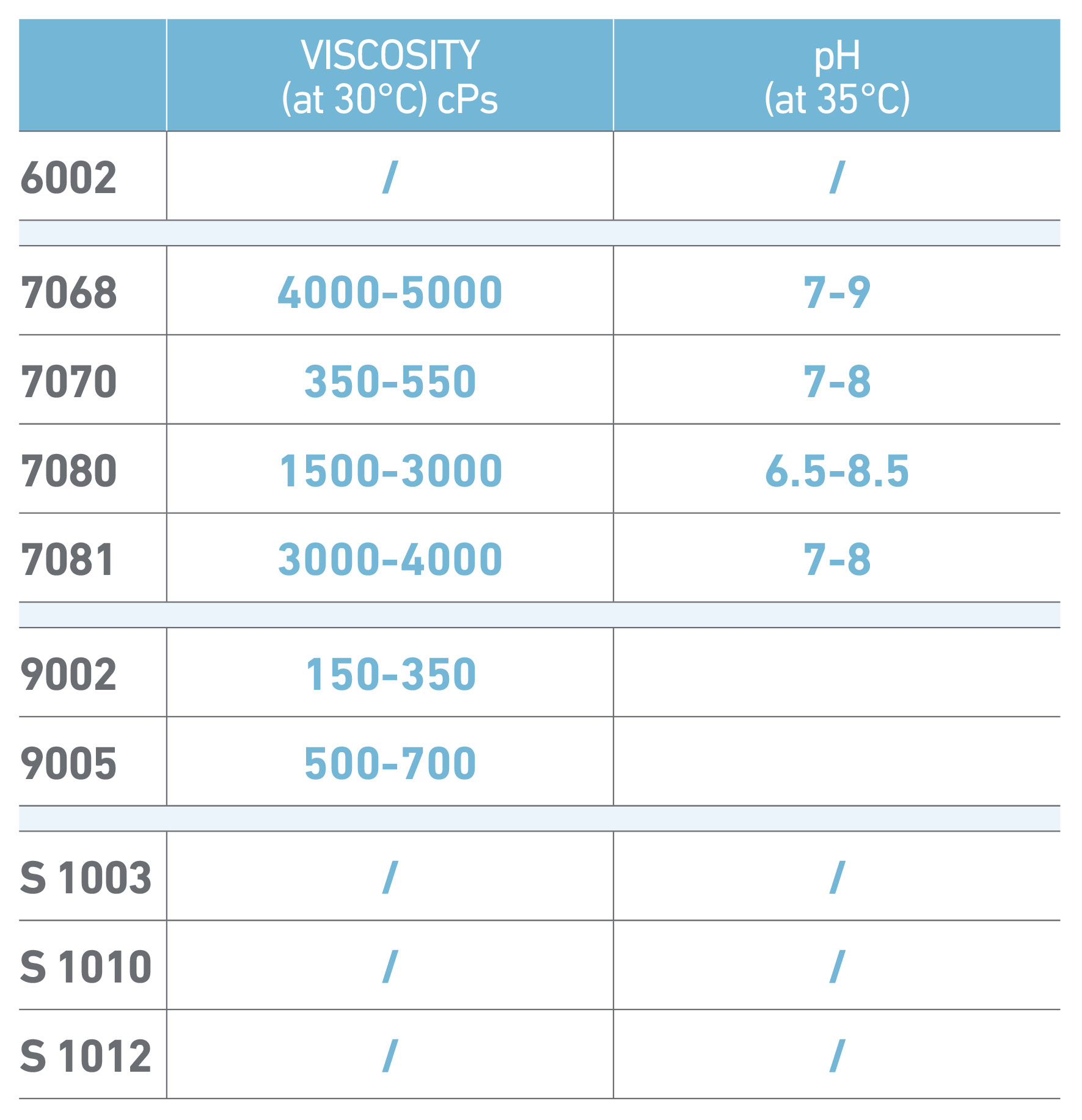
The high and low-weight applications listed here are intended as indicative of the product’s most common use. In many cases, this distinction depends on the percentage at which the product is used.
Powder products
Alongside the liquid solutions, SERIES S introduces a completely different approach based on powder products. This makes it possible to overcome one of the main limitations of liquid formulations — namely the maximum solubility of raw materials. In a liquid system, there is a point beyond which increasing the concentration compromises stability and viscosity. The powder format removes this constraint, allowing work at very high concentrations. The product is prepared directly on-site, through a dispersion process in water, which brings significant logistical benefits and greater formulation flexibility. At the same time, it requires more careful handling and a higher level of operational expertise, since the result depends heavily on how the product is prepared and on the characteristics of the granules being used.
The use of color tracers (dyers)
One practical feature that has been introduced over time is the use of color tracers. Series 6 is identified by a blue tint, while Series 9 uses an orange one. This is not a matter of aesthetics — the color simply allows operators to check briefly whether the product has been applied correctly across the line. It may seem like a small detail, but it proves extremely useful for process control, making it easy to spot any inconsistencies or irregularities straight away.
Conclusions
Taken as a whole, the GRANICER range is a sophisticated technological system, built up over time to address increasingly complex production needs. From the reliability of Series 6 — still an effective and dependable solution — to the widespread use and versatility of Series 7, from the high but selective performance of Series 9 to the different logic of Series S, oriented towards maximum concentration and customization, each family reflects a distinct phase in the evolution of the sector.
In a production environment where there are no standard solutions, the value of the range lies not in any single product, but in its ability to adapt to ever-changing conditions. It is this capacity to interpret the process — rather than simply provide a one-size-fits-all answer — that represents the true strength of the GRANICER system.