#29 Glazes/engobes’ bacterial degradations: technical & aesthetic consequences



- Introduction
- Origin of bacterial degradations
- What happens to a glaze during degradation?
- Prevention is better than cure
1. Introduction
All process water involved in ceramic production, both tap and well waters, usually contains a variable percentage of bacteria.
And the same applies to inorganic raw materials used in the grinding process to produce the semi-finished products that will be later applied along the glazing line: frits, clays, feldspar, nepheline, etc.
2. Origin of bacterial degradations
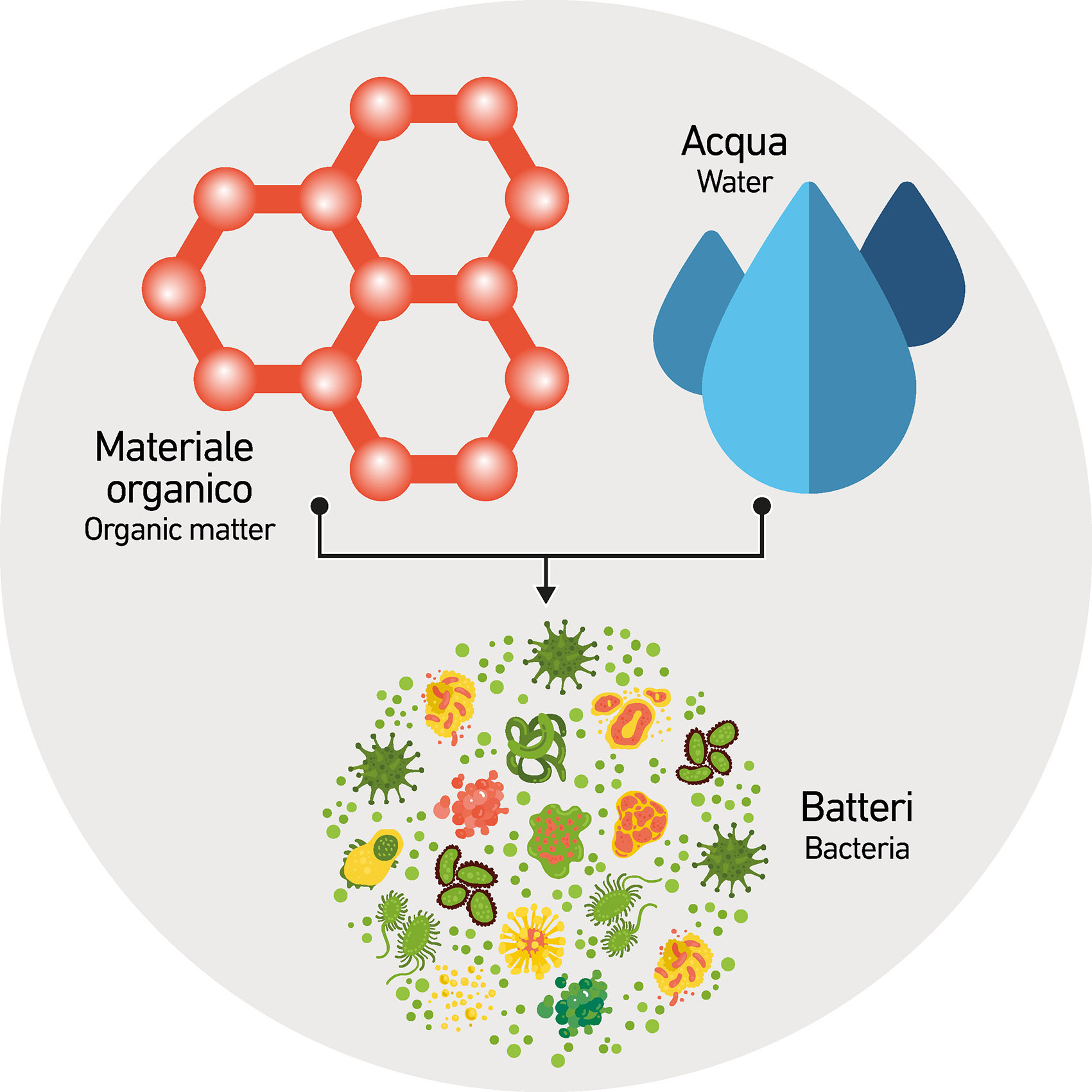
WATER & ORGANIC MATTER
Because of the huge amount of water, glazes and engobes’ grinding departments can sometimes be under the attack of significant bacterial proliferation.
Microorganisms (bacteria in particular), in fact, usually find a suitable and natural habitat within water and ceramic raw materials. They can be harmless when they do not start their action but they become a serious problem in the simultaneous presence of water and organic matter. The latter, that is one of most important sources of nourishment, can be found within glaze suspensions and chemicals used in the grinding process.
TEMPERATURE
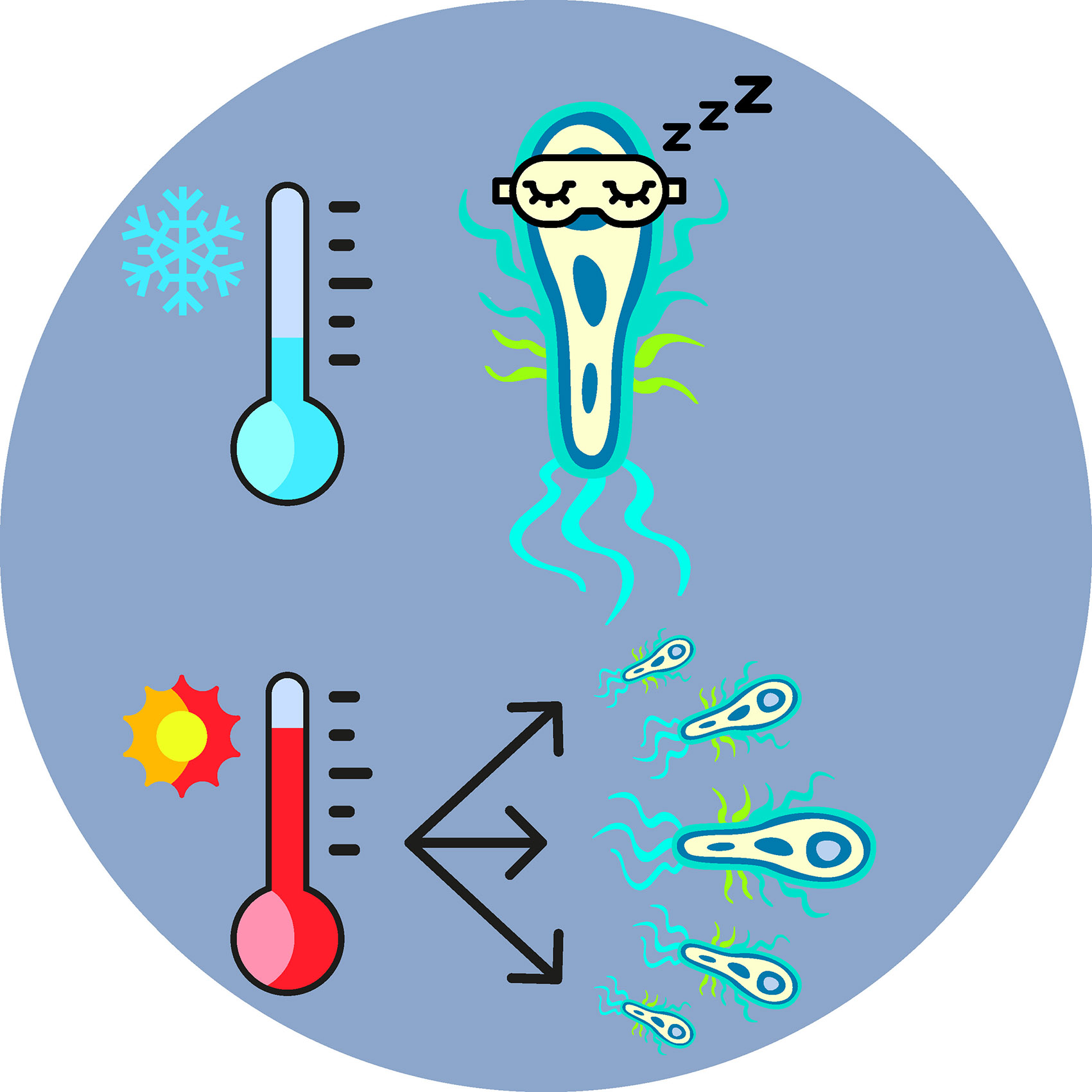
Bacterial proliferations, whose origin is mostly due to the presence of organic matter, can also be promoted by thermal factors. Bacterial activities, in fact, are preferably promoted by high temperatures: the higher the temperature increases, the more is the possibility of bacterial attack.
Given the high temperatures reached during the glazes and engobes’ grinding process, it is easy to understand that grinding departments can be considered a real comfort zone for germs and microbes.
All the tools used in the departments, such as mills, tanks and pipes, are often contaminated and we usually discover degradation phenomena only when they have reached a high level of proliferation.
In other words, we usually smell bad odors only when the problem is underway. At that point, the system is entirely contaminated and if you do not take immediately action you keep on feed bacteria by using the organic product involved in the grinding process. Once the problem has been detected, the sanitization of the entire department is the only way to solve it.
3. What happens to glaze during degradation?
As we know, ceramic glaze suspensions contain several substances, such as for example binders, leveling agents, glues, dispersants, and rheological modifiers. All these elements are useful, or even necessary, to reach the rheological features, and therefore to develop a proper application process.
The activity of microorganisms attacks the polymers and destroys the organic part of the chemicals in suspension, significantly decreasing their action and efficiency. The change that occurs, of course, reflects on the features of the glaze that, since it does not have the right characteristics according to the production line’s parameters, it can lead to many different problems. Following here the most common ones.
PROBLEMS IN MANTAINING THE GLAZE IN SUSPENSION
Solid particles tend to agglomerate and to be improperly suspended within the solvent, usually precipitating and developing sedimentation phenomena
LACK OF COHESION
Glaze’s particles seem to be unbound and not very “compact”. These conditions are not suitable for the proper discharge of the suspension on the raw tile’s surface, since they can lead to technical and aesthetic defects, such as holes and pinholes.
IMPROPER DRYING TIME OF THE SUSPENSION
The improper drying times can promote an improper integration between the layers of the ceramic tile that are applied one after the other along the glazing line. The lack of interaction between the layers (usually due to a chemical incompatibility) may be an important problem not only during the process but also after the firing cycle.
IMPROPER LEVELING OF THE GLAZE/ENGOBE
This is a problem that can hinder the application process, often halting the production also affecting the proper final result: technically and aesthetically.
POST-FIRING DEFECTS
Along with holes and pinholes, improper parameters of glaze or engobe’s suspensions deriving from the weakening and inefficiency of chemicals in suspension may promote other kinds of defects that can negatively impact on the tiles. The re-boiling effect is one of the most common.
4. Prevention is better than cure
Even if all these examples occur quite often, they may seem not enough to understand the importance of defining a prevention protocol, to handle and properly treat the working area of the plant, with particular attention to glaze and engobes’ grinding departments.
This means acting upstream, before degradation spread out.

In this perspective, a universal action for all factories does not exist. It is important to study and develop tailor-made solutions according to producers’ needs and to the set-up of the plant. This means to choose proper operations and to produce products containing specific biocides and sanitizers able to restore the system. Before doing this, some important parameter should be considered to collect indicators able to give the right direction of the intervention measures:
- Waters’ level of contamination
- Raw materials’ level of contamination
- Type of tanks that contain glazes or engobes
- Grinding times
- Storage times