#01 Why do tiles explode within the kiln?



- The process
- Features of the water inside ceramic bodies
- Water and temperature gradient
- Density of the ceramic body
- Actions and solutions
1. The process
During the firing cycle, tiles usually heat up gradually and during the heating process, it also and obviously starts the water evaporation process that is both on the surface and inside the ceramic body.
The heating process may change according to dimensions and thickness of the ceramic to be produced but we can generally say that the temperature’s increase inside the kiln must be constant as well as calibrate to reach a final good result.
The evaporation process – that starts in the first part of the kiln and more specifically in the preheating phase – involves and produces a water migration from inside to outside the ceramic material. This migration does not lead to any problems when it develops properly but it can be a serious critical issue when it takes place incorrectly.

In this regard it is important to underline that, in this phase, no chemical or physical transformations have been occurred within the ceramic body and this means that clays, sands and feldspar have not merged yet. The sintering process (the micro-casting processes that melt together the spheres of the ceramic mixture) is yet to come.
2. Features of the water inside ceramic bodies
Wanting to simplify, we can identify two different kind of water:
- Residual moisture (water that is not chemically bound to the inorganic element of the tiles)
- Hydration water (water that is chemically bound to the structure of the ceramic body)
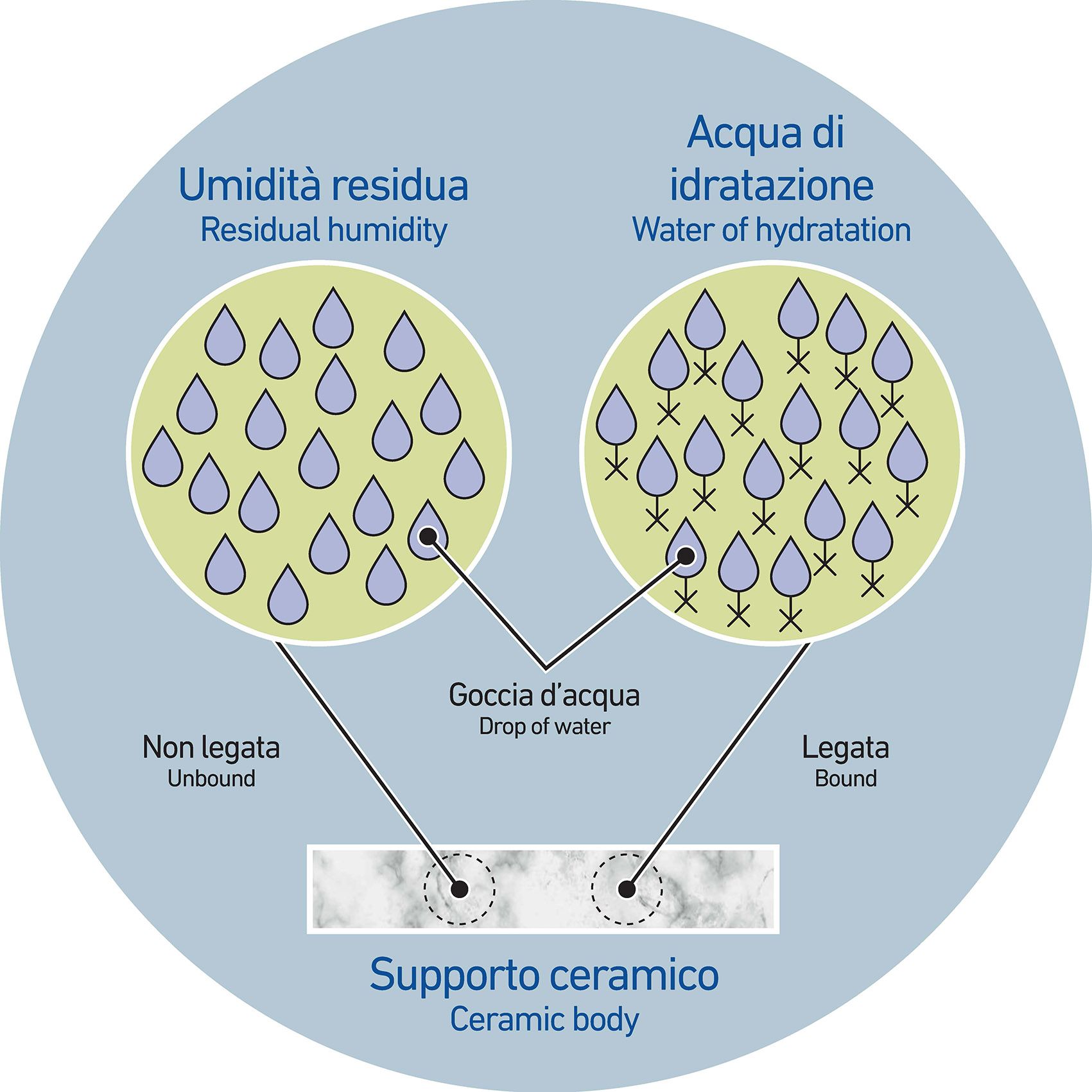
The latter, being structurally bound to some of the inorganic components of the support, needs more time and higher temperatures to evaporate.
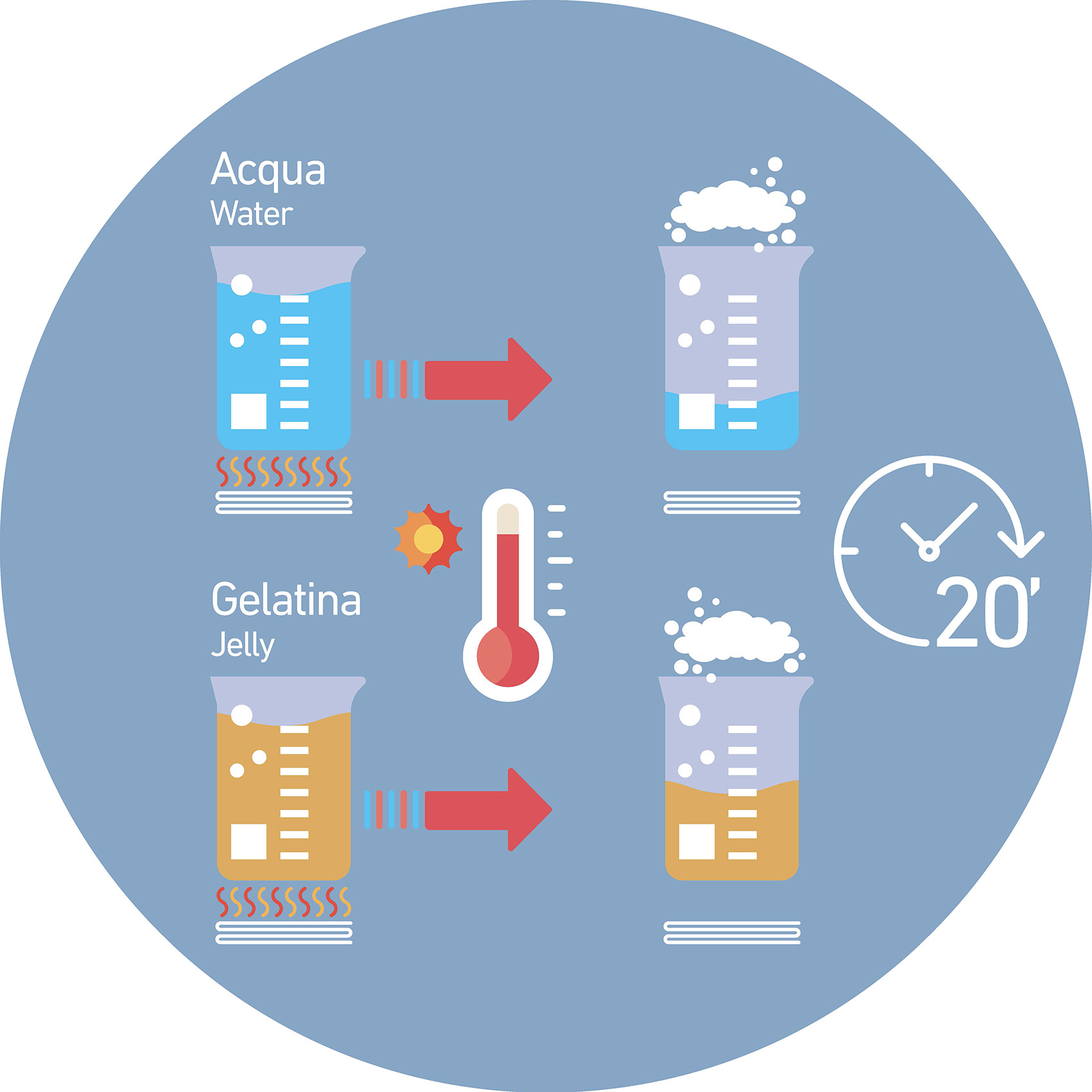
To better explain the reason why time and temperature are different between the two we can make an example from the world of cooking, where chemistry plays a very important role. If for example we simultaneously put on fire a glass of water and glass of gelatin we will see that the water inside the gelatin needs more time to evaporate: that’s because it is bound to the isinglass that is in the gelatinous mix.
3. Water and temperature gradient
Going back to ceramic, the evaporation phenomena come out in the preheating phase due to the progressive and constant temperature’s increase (till 300 / 400 °C). This progressive increase in heat is called temperature gradient and it plays a decisive role on the proper waters’ evaporation process.
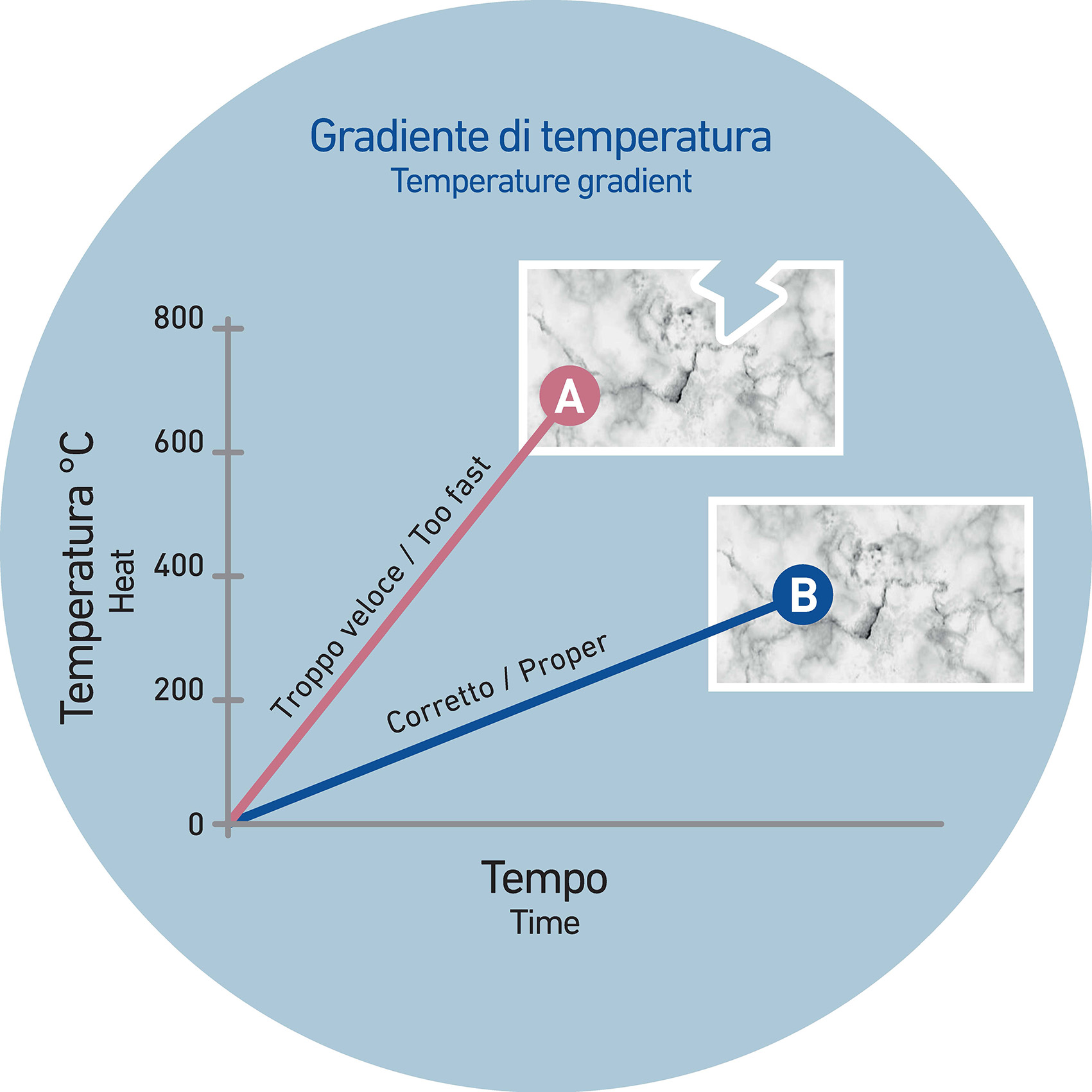
What does that mean? It means that when the gradient is constant and slow, the water inside the support has enough time to migrate and properly evaporate. When the temperature’s increase is instead irregular and/or too rapid the ceramic body can finally explode.
What exactly happens?
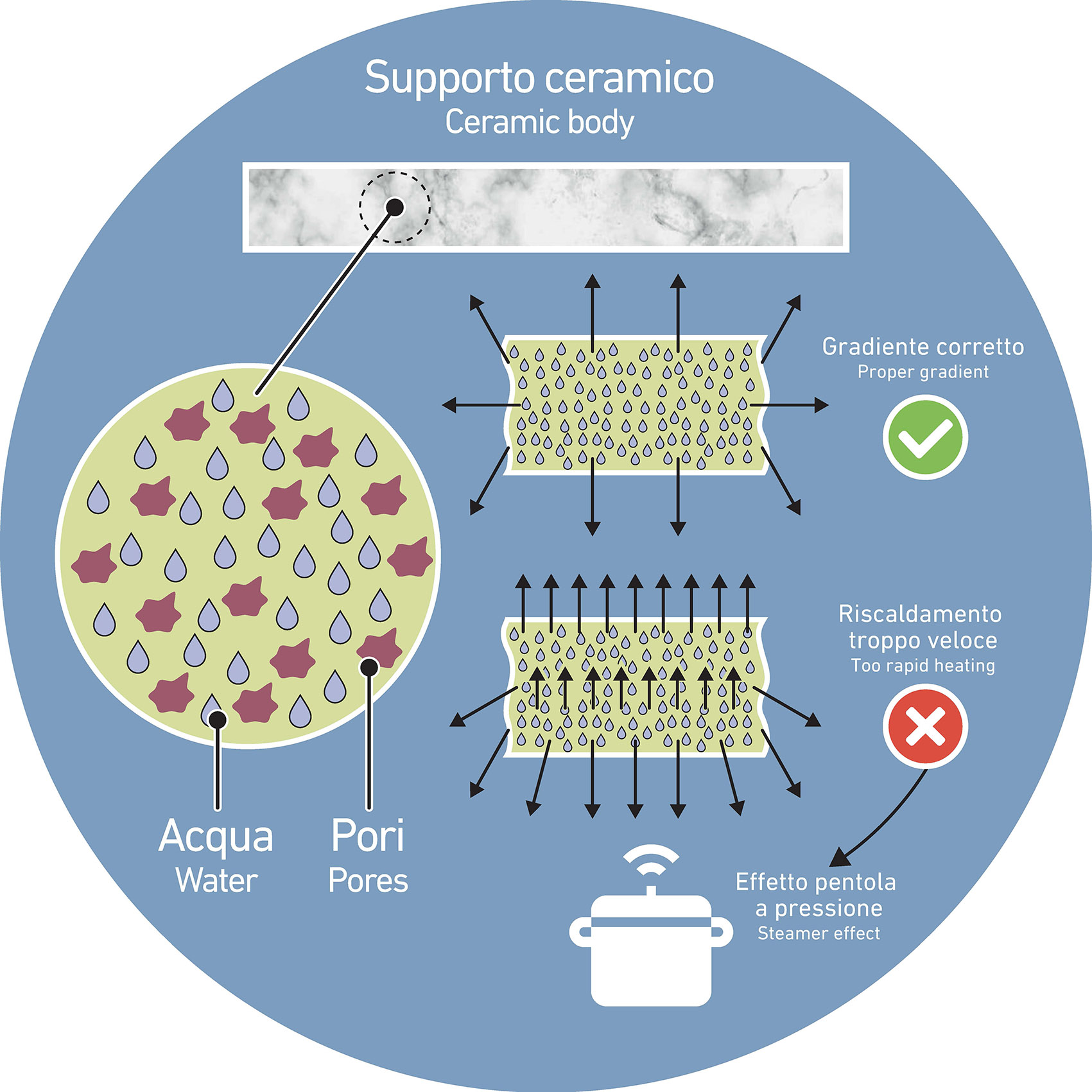
When the water reaches too rapidly a very high temperature (much higher than 100 degrees) it happens what we could commonly call the pressure cooker effect.
.
The water, heating too rapidly, produces a violent PRESSURE that in turns causes a strong EXPANSION inside the ceramic body. The pressure, together with the expansion, is able to affect the mechanical features of the material producing a DEFORMATION and than the EXPLOSION of the support.
4. Density of the ceramic body
As we have already seen, the breaking of tiles may be caused – for sure – by the improper water evaporation process but it can also be promoted by the DENSITY of the ceramic body.
All raw materials, in fact, during the pressing phase undergo to a very high pressure to produce a resistant ceramic body capable of not being damaged on the conveyor belts of the production line.
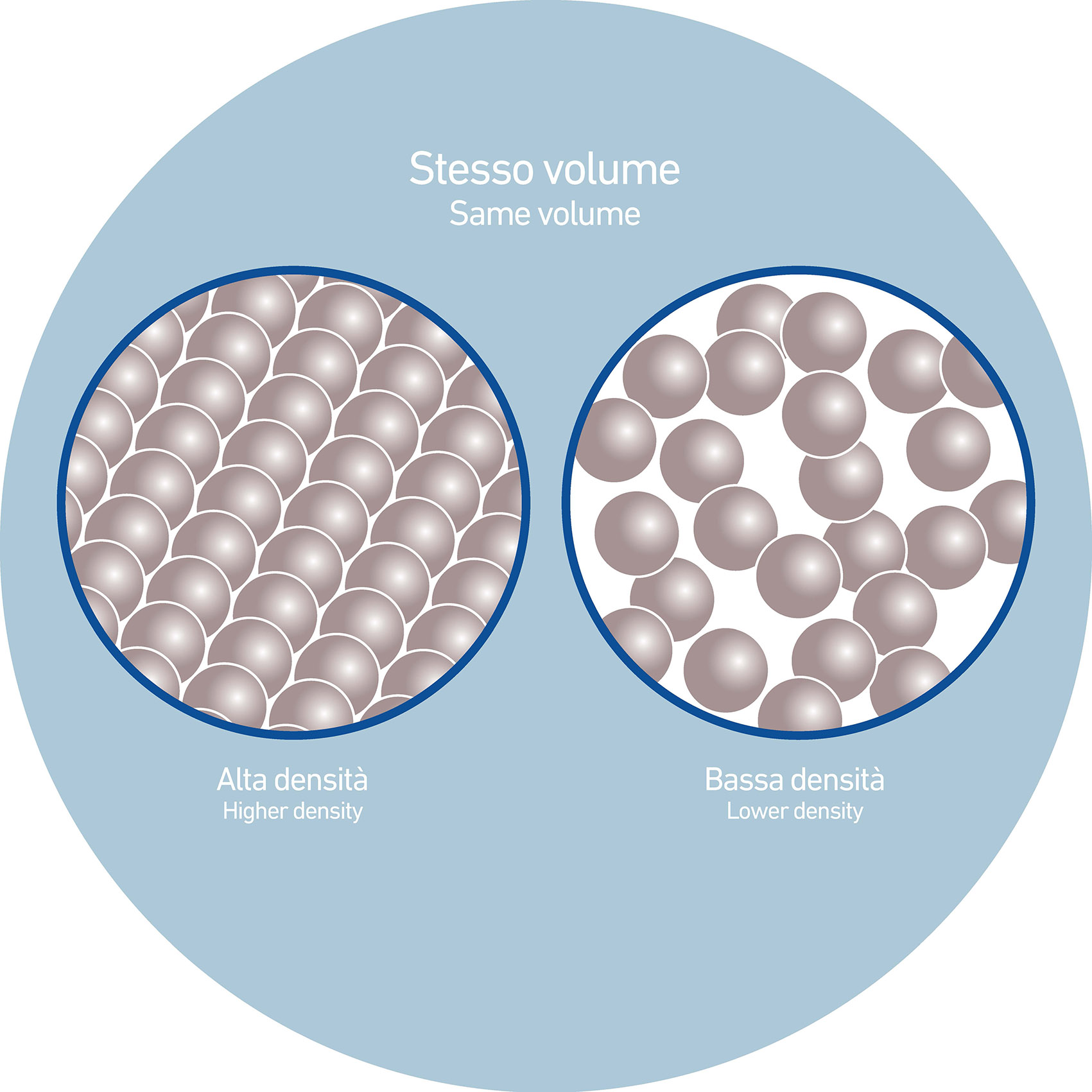
However, a high-density material forces the evaporation water to produce a greater effort during its migration from the ceramic support. The higher is the density, the more likely the problem occurs.
5. Actions and solutions
What actions can be taken to avoid and/or control the problem?
First of all, the solution is nearly always to be found in the production phases that take place before the firing process, especially along the glazing line where waters are added in large amount both on and inside the ceramic body.
Let’s try to make a list of the main possible actions.
A. ACTIONS ON THE RHEOLOGY OF THE WATER SOLUTION
The first action is for sure the most complex and delicate but at the same time the most effective.
It is important to study very carefully within the lab the solution’s rheological features, according to the specific production conditions (raw materials in use, production machines, kind of application, technical and aesthetical features of the product tile to be produced).
This means that it is necessary to provide the watery solution (engobes, glazes or grit suspensions) with the proper values of density, viscosity, flow limit etc. so that they can be correctly combined to the specific parameters of the production line.
For example, it is possible to change the rheology’s features by increasing the density of glazes and engobes that, as we know, usually contain a large amount of water.
This means, in other words, to reduce the water’s rate.
B. PRESSURE REDUCTION
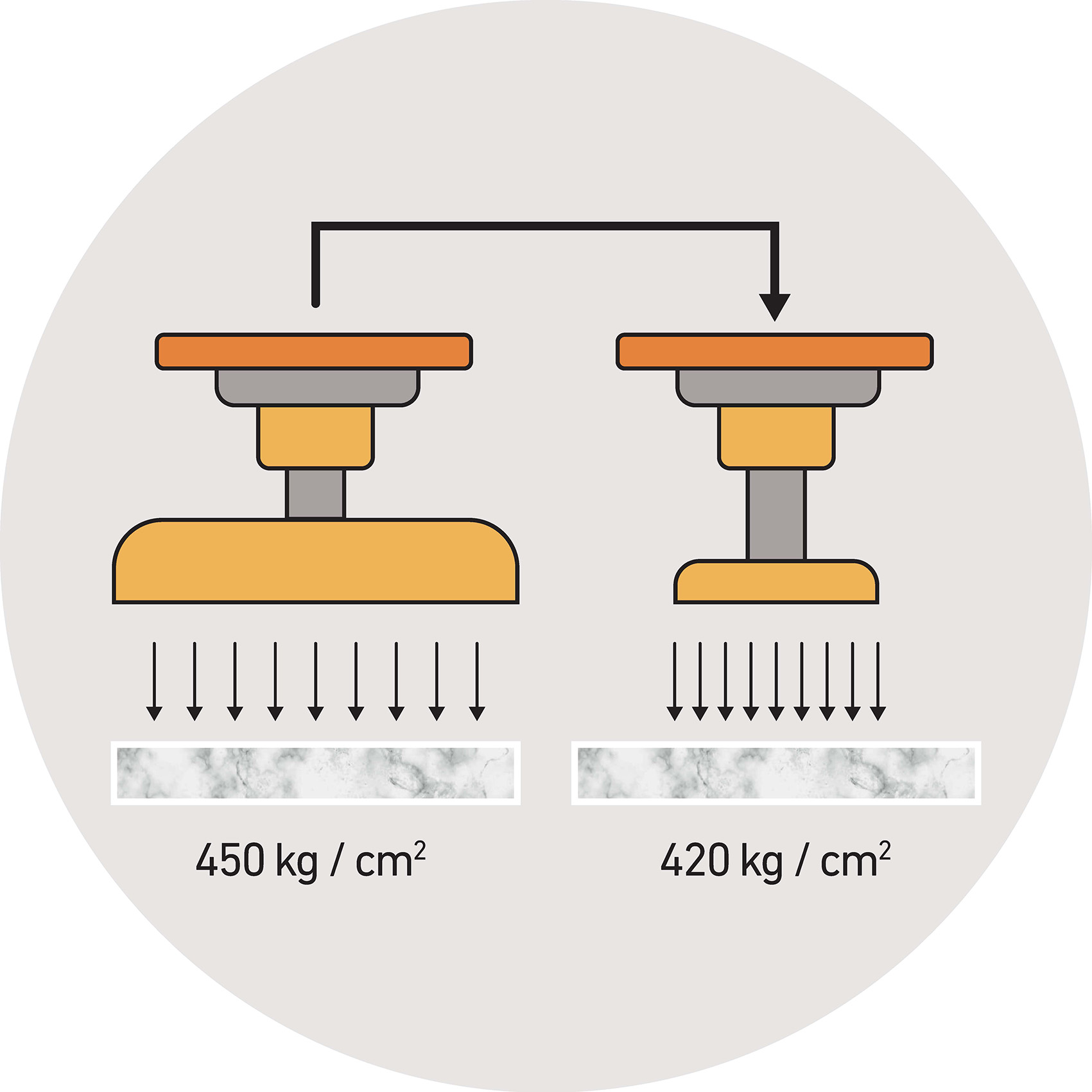
Another option is to decrease – during the pressing phase -the weight applied on the inorganic raw materials that form the ceramic body. For example, we could decrease from 450 Kg/cm2 to 420 kg/cm2.
This weight reduction, even it seems very modest, significantly effects on the density value of the ceramic body. This reduction helps the water migration process, helping us to reduce the problem.
C. APPLICATION CHOICES
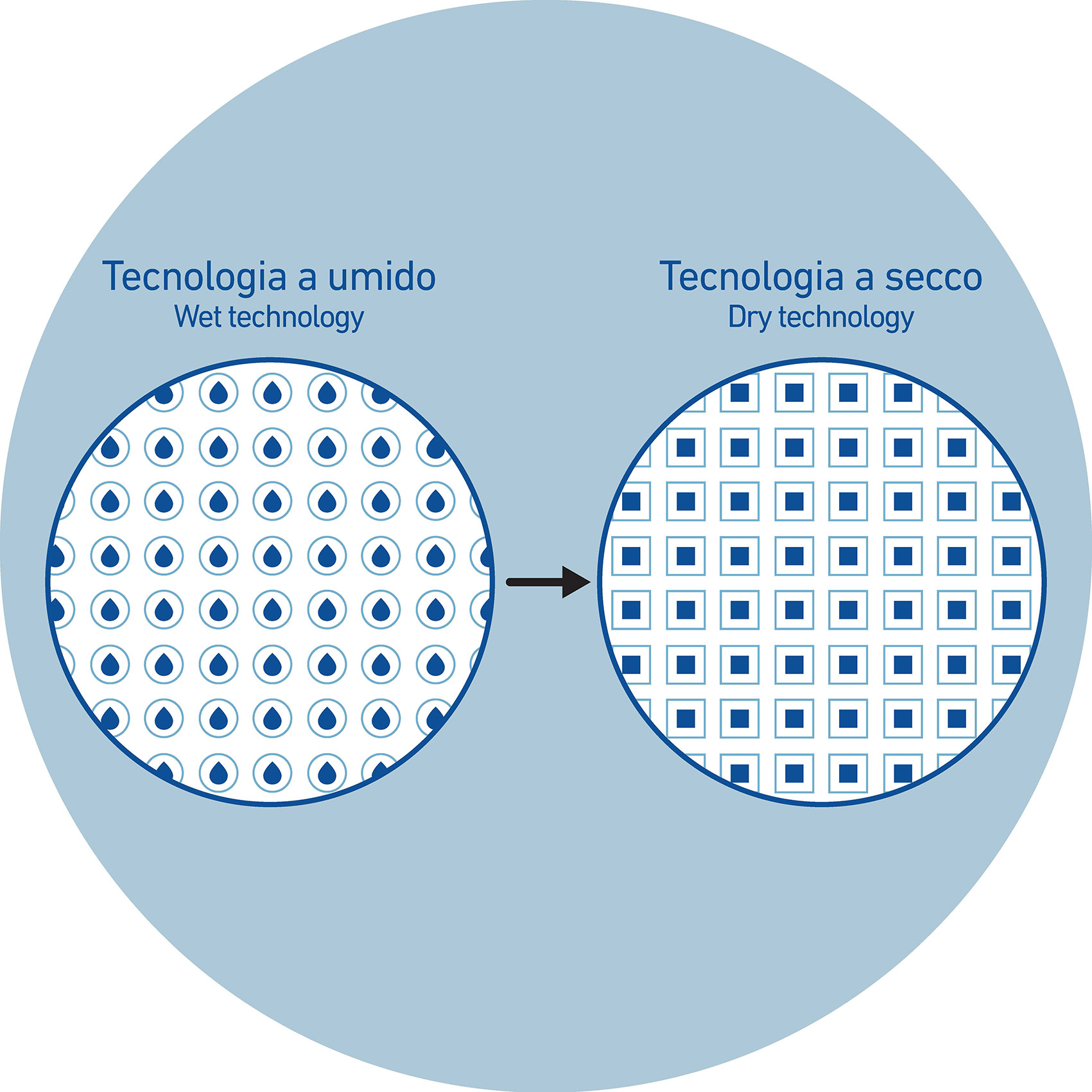
Another way to get around the problem is to make a clear choice in terms of application technology.
The most effective (and at the same time obvious) is to switch from a wet to a dry application. The latter, characterized using a digital glue together with a dry grit application, involves of course a very lower amount of water that, as we have seen, is one of the most important responsible for the problem.
D. TIME SPENT WITHIN THE KILN
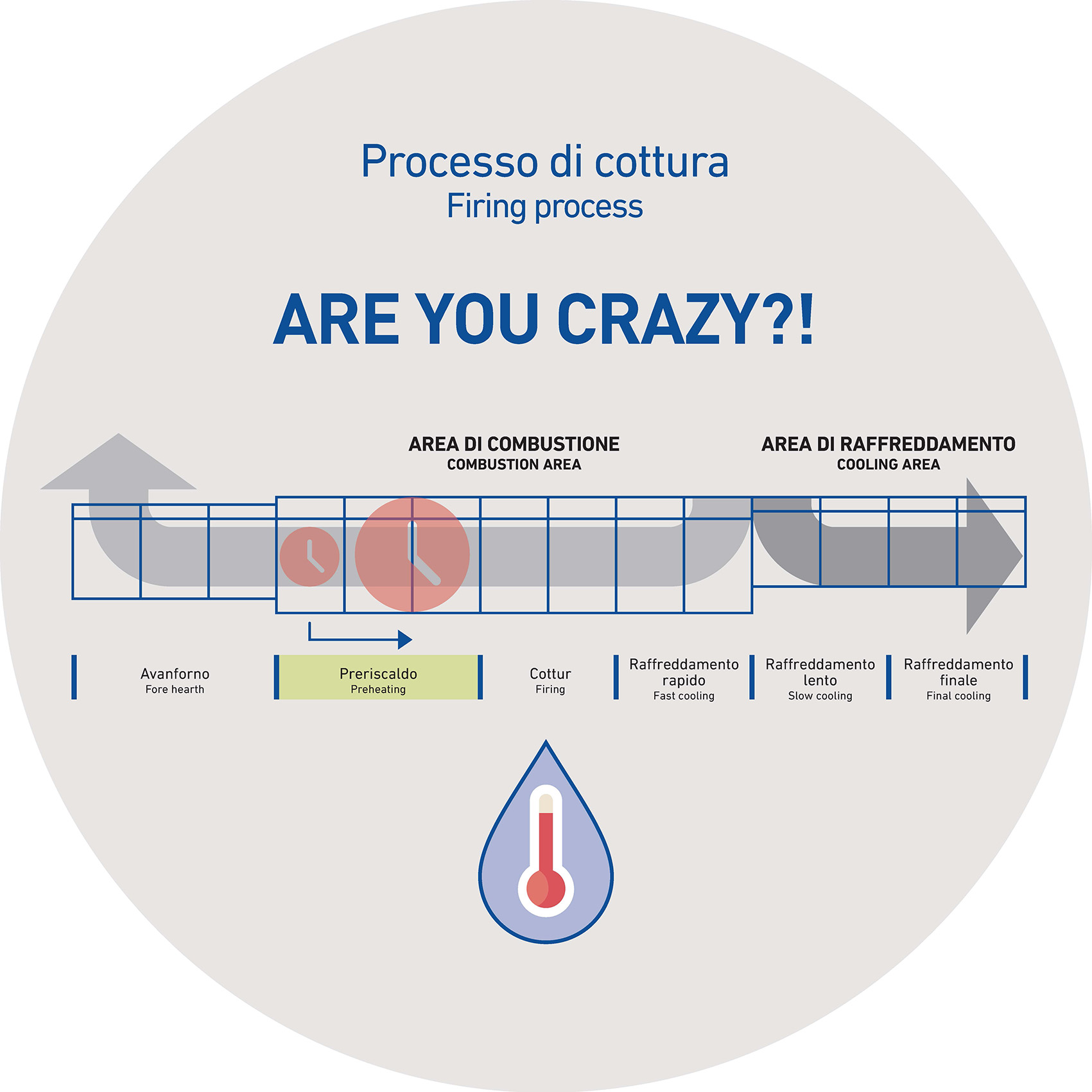
Finally, the last option that we put on the table is quite crazy – because it is not very feasible – but it clearly explains the role of the kiln. What does that mean?
We could increase the duration of the firing phase so to facilitate the proper evaporation process.
This is theoretically a good option, but of course it will not be taken into consideration because it seriously affects the productivity of the industrial process.