Pinhole
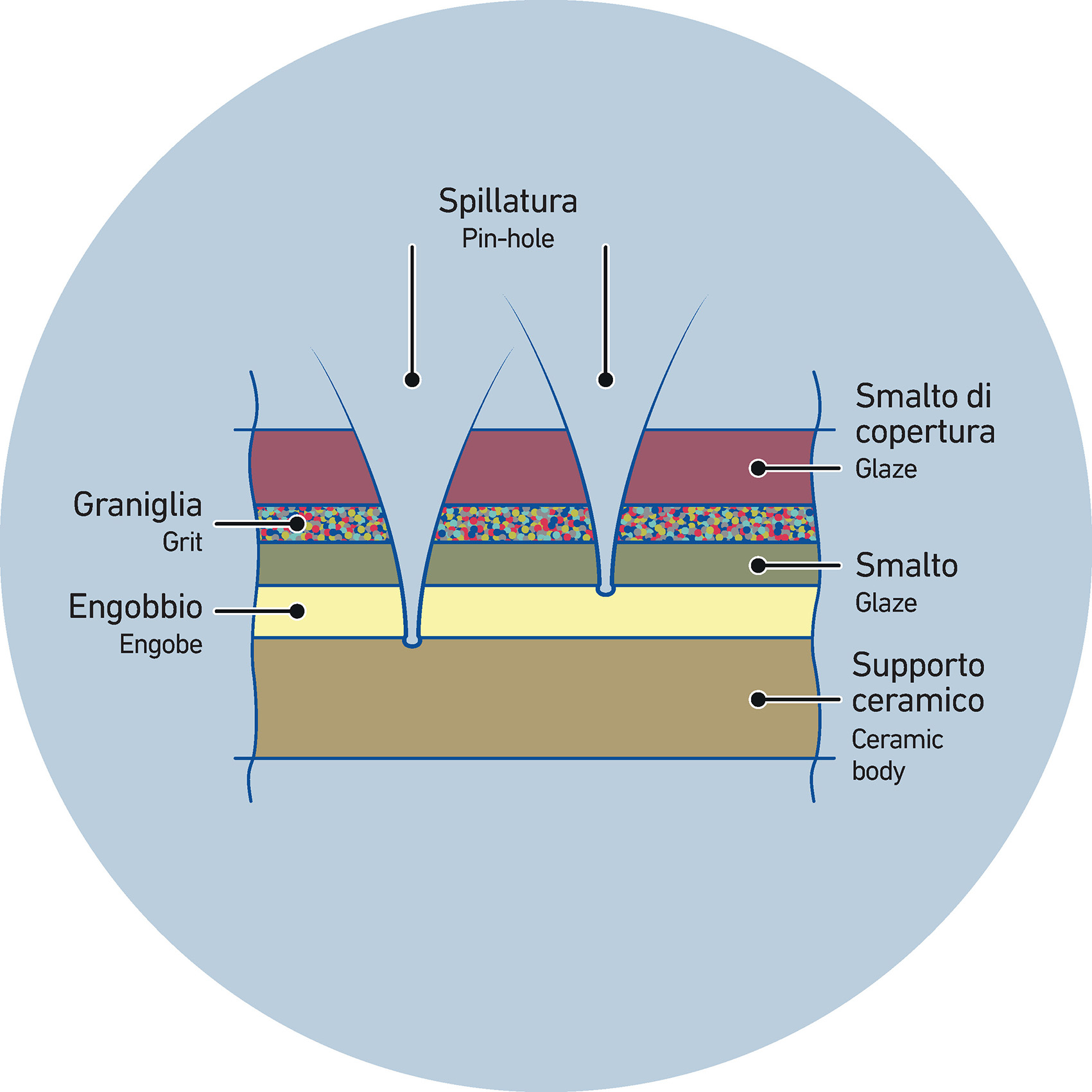
Glaze's defect that comes as a micro-hole on the tile's surface. The hole usually passes through the application layers: not only the superficial glaze but also the previous application of the glazing line such as grit and sometimes even the engobe. These holes, localized or widespread, make the surface porous and therefore easily attacked.
The problem can be already visible during glaze application and it is usually persistent even after the firing cycle.
Causes and origins of this particular critical issue are many and they usually must be found not only inside the kilns but also, and above all, in all that production steps that comes before the firing cycle. Especially along the glazing line.
In short, pinholes usually appear because of a lack of cohesion between the application layers tha make-up the ceramic support:
1. Ceramic support (pressed atomised powder)
2. Engobe
3. Glaze (or Smaltobbio)
4. Digital decoration
5. Grit
6. Final protection glaze
The lack of cohesion, in turns, is usually due to an improper temperature of the raw ceramic material.
A too low temperture of the raw ceramic body may lead to uneven drying of the glaze or grit applied as a final application before the tiles enter the kilns.
This uneven drying process could lead to critical issues at the inter-phase (the touchpoint between two application layers) that result in different kinds of defects: pinholes are one of the most popular.
Since we cannot make a detailed list of the wide range of causes and effects, we can shortly say that the mix/blend between different phases (or layers) and the abnormal water release in the glaze during the firing process are the most important aspect to check.