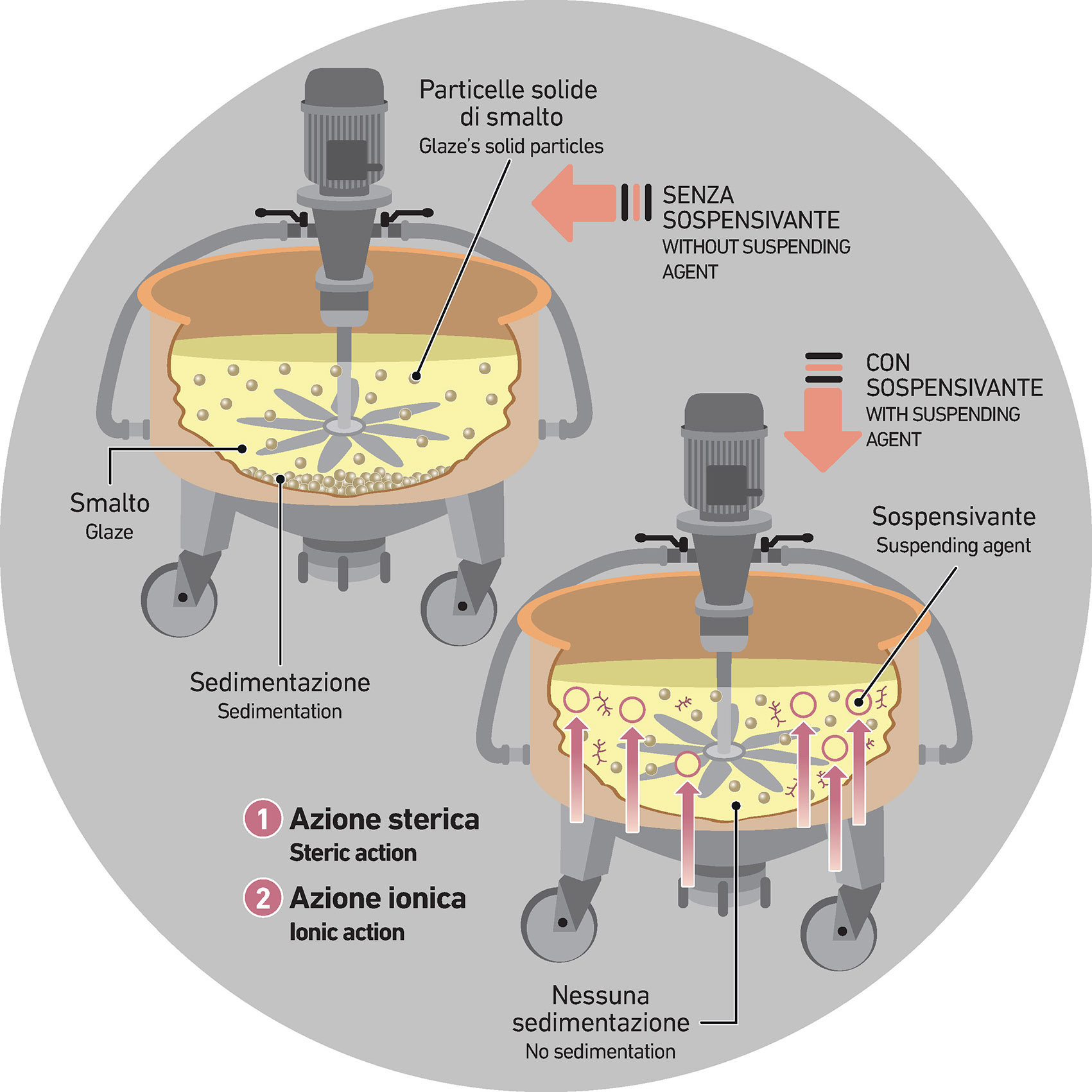
Grit Suspension: measurement of density and viscosity values
Actions:
#01. Measurement of the additive quantity
#02. Dilution with water
#03. Activation of the mechanical stirrer
#04. Addition of grit
#05. Mixing (approximately 10 minutes)
#06. Transfer of the mixture into the pycnometer
#07. Density check
#08. Washing of the pycnometer
#09. Pouring the mixture into the Ford cup (viscometer)
#10. Measurement of the outflow time
#11. Data recording
The measurement of viscosity and density values of a grit suspension is carried out through a sequence of steps starting from the mixing of the three main ingredients: grit, water, and additive (typically a binder and suspending agent). The determination of these values follows the customer’s specifications based on production line requirements and parameters. The ingredients are mixed using a mechanical stirrer, with a predefined mixing time that can be adjusted if necessary.
Once proper mixing is achieved, the sample is transferred into a pycnometer—a metal cylinder of known volume (approximately 100 cm³)—used to determine the mass-to-volume ratio: density.
After obtaining the density value, viscosity is measured using a Ford cup: the time it takes for the fluid to pass through the orifice of the cup is used to determine the viscosity. The longer the flow time, the higher the viscosity of the sample under examination.
The determination and adjustment of density and viscosity values—by means of water and/or appropriate additives—are crucial for the proper execution of the ceramic production process.