Ceramic body: fluidization study
Actions:
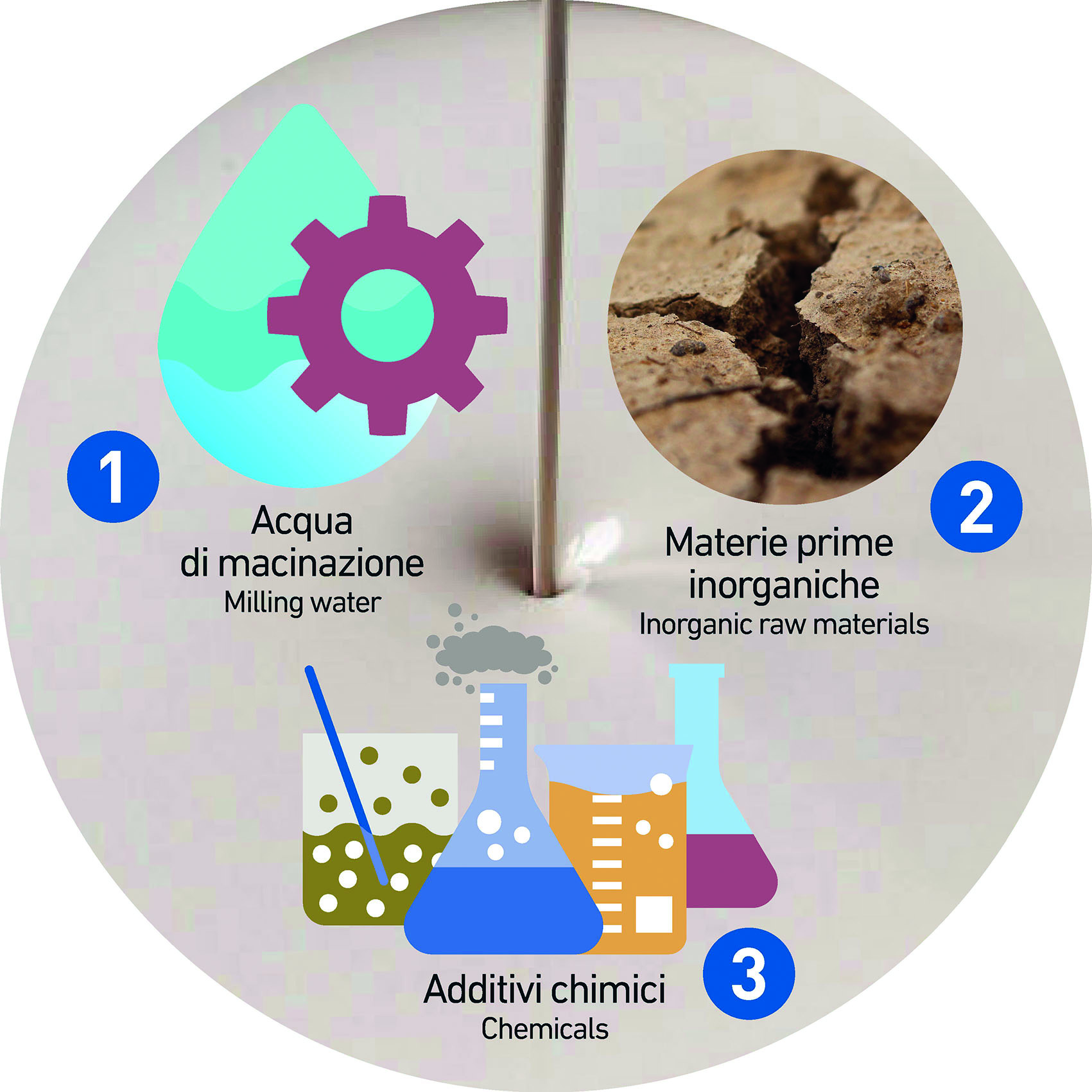
#01. Preliminary stirring of the milling water
#02. Preparation of the body in the milling jar
#03. Determination of the amount and type of dispersant
#04. Addition of the dispersant and milling water
#05. Milling of the body in the ball mill
#06. Slurry discharge
#07. Slurry: viscosity check (Ford cup) and density (pycnometer)
#08. Control of milling residue: sieving (a), determination of the residue (b)
#09. Detailed measurement of rheological values (viscometer)
#10. Final result: rheological curve graph
The fluidization studies of ceramic bodies play a crucial role in optimizing milling conditions during industrial processing.
These conditions are typically predefined by ceramic manufacturers based on the specific parameters of their production lines and tailored to meet their unique operational requirements.
This is a complex, iterative process that may involve multiple adjustments before achieving the desired outcome.
By thoroughly analyzing the rheological properties of the slip, it becomes possible to identify the most suitable additives – particularly dispersants – to meet both technical and commercial needs specific to each manufacturer.